Installer coverage planner
Plan installer coverage against real density. Qualifying property density by outcode, so installer regions are planned against where the suitable stock actually sits.
Get this skill →
Ready-made skills for Claude, ChatGPT, and any MCP-compatible tool. Pick one, sign in, and start asking — no code, no downloads.

Plan installer coverage against real density. Qualifying property density by outcode, so installer regions are planned against where the suitable stock actually sits.

Split owner-occupiers from landlords. Ownership and let-status signals separate a homeowner sale from a landlord portfolio conversation. Two products, two pitches, one filter.
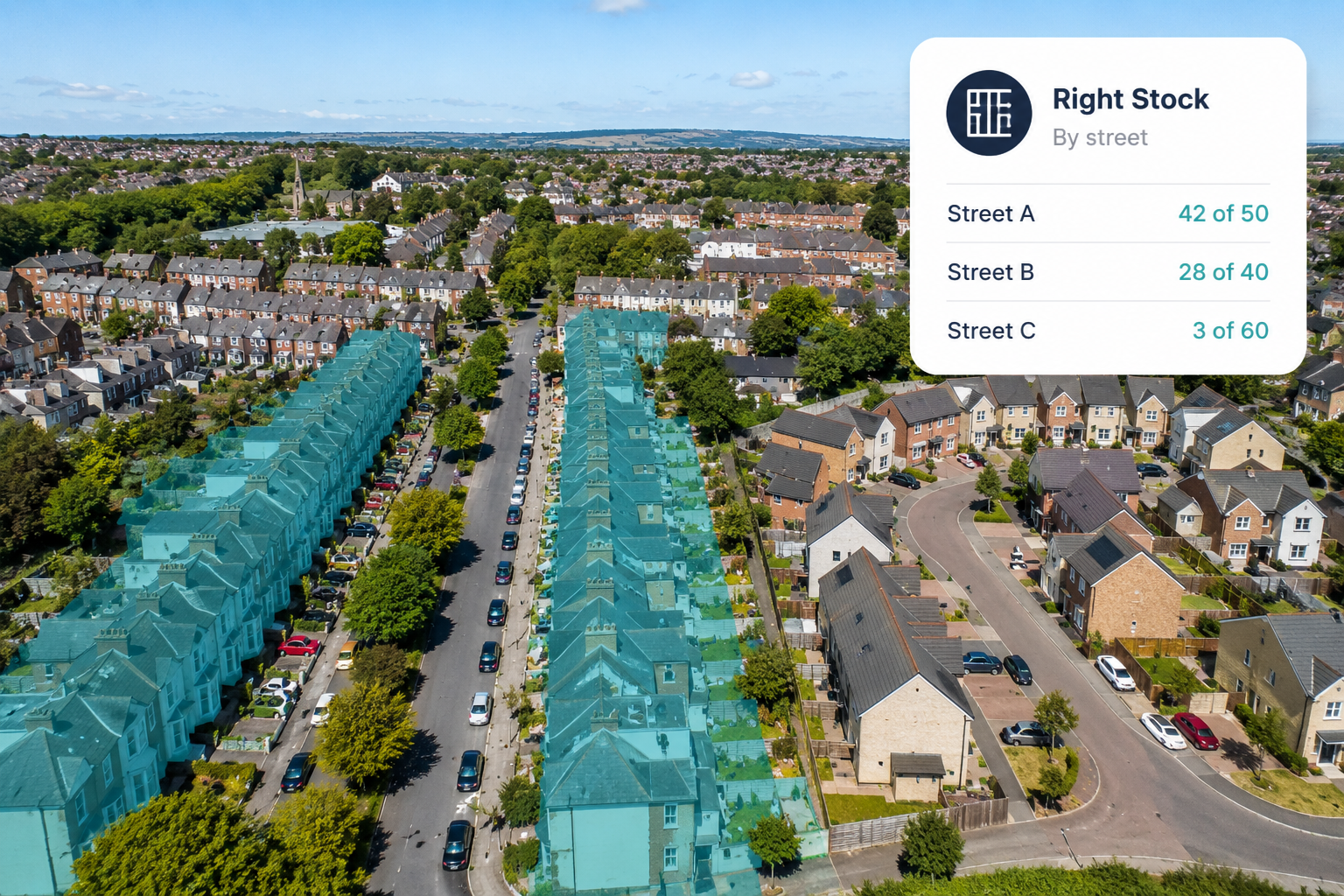
Leaflet the streets with the right housing stock. Map qualifying properties by street and outcode, then export to CSV for a targeted door drop. Same print run, aimed at the housing stock the product suits.

Screen against scheme criteria. Low-EPC properties combined with area-level income and vulnerability context as screening inputs for retrofit funding routes. Screening indicators, not an eligibility decision.

Match the property to the right product. Fabric, EPC, heating fuel and roof characteristics indicate which measure fits. Solar where the roof supports it, insulation where the fabric needs it, heat pumps where the building can hold the heat.

Screen the address before you book the van. Check wall and roof construction, insulation, glazing and heating system for any address before the appointment is confirmed. Stop sending surveyors where the product cannot go in.

Spot the move before you lose the customer. Transaction and occupancy signals against your existing customer address base, so a move triggers a retention conversation instead of a closing account.

Property-level inputs for scheme targeting. Low-EPC properties combined with area-level income and vulnerability context, as inputs to obligation-scheme targeting. Property signals, not eligibility decisions.
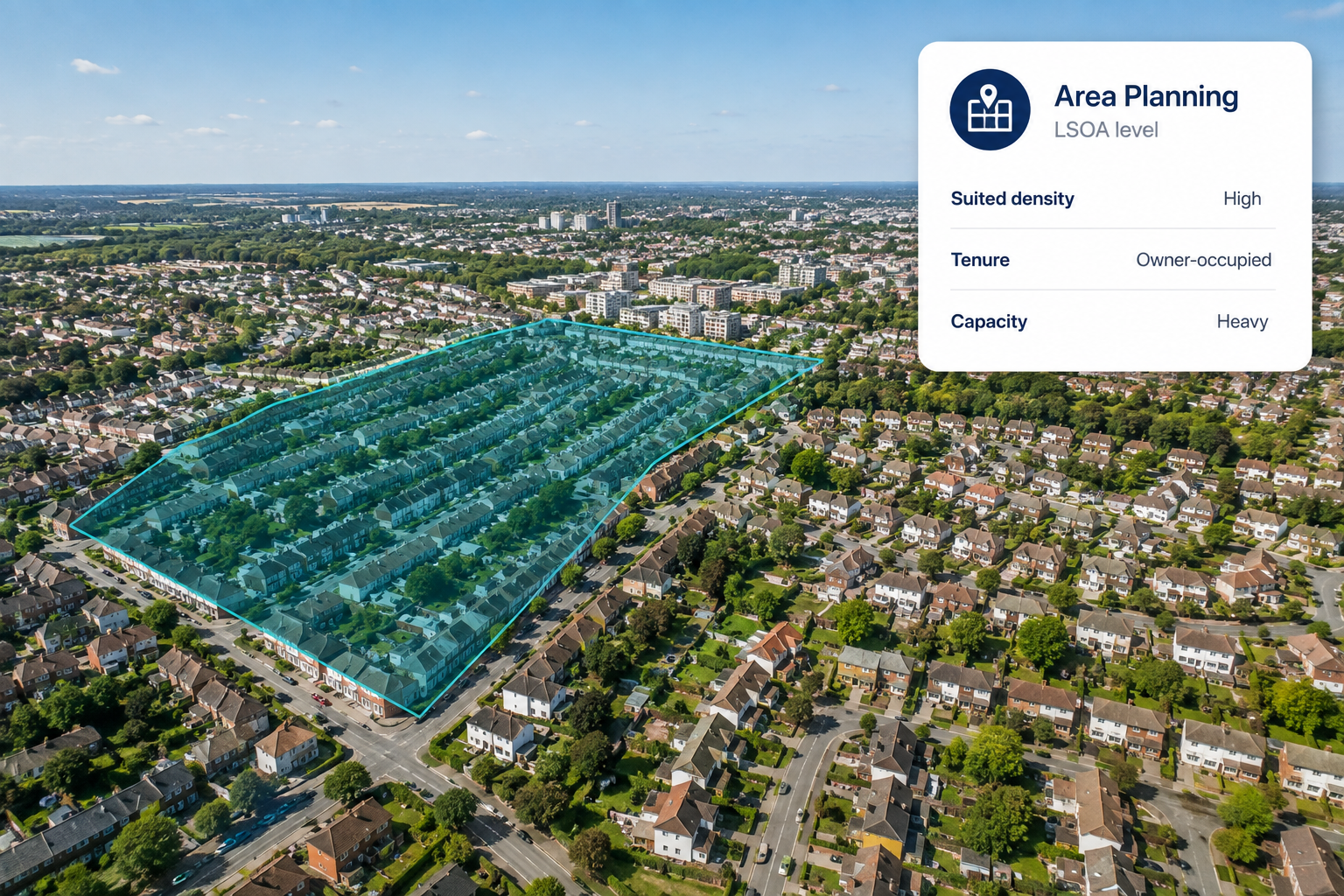
Plan by area, not by region. Property age, tenure mix, EPC distribution, household composition and income context at LSOA and outcode level, so field, print and installer capacity is planned against real density.
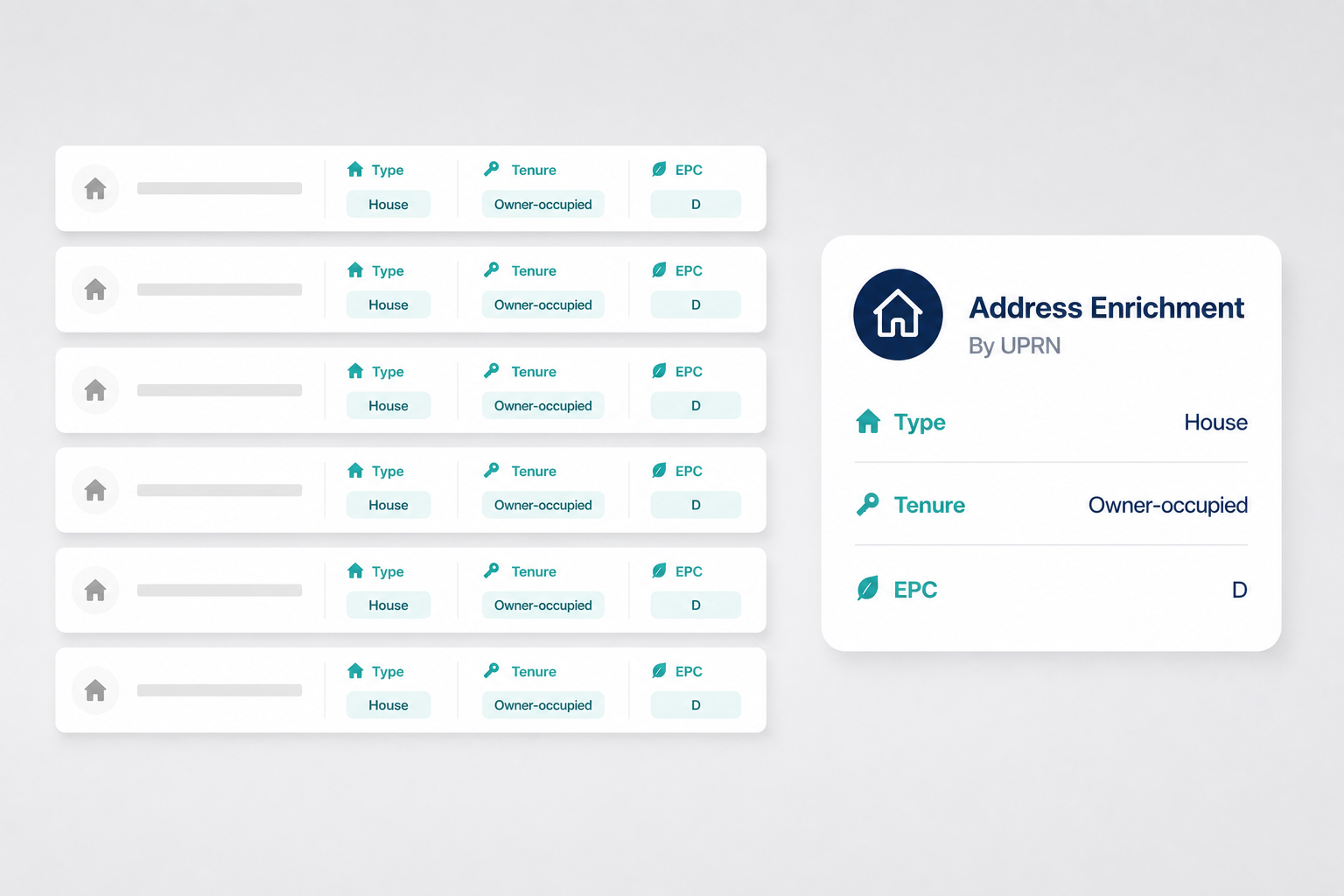
Enrich your own address base by UPRN. Bulk enrichment of your existing address estate with property attributes, tenure and EPC, so you can segment the book you already have before spending on the book you do not.
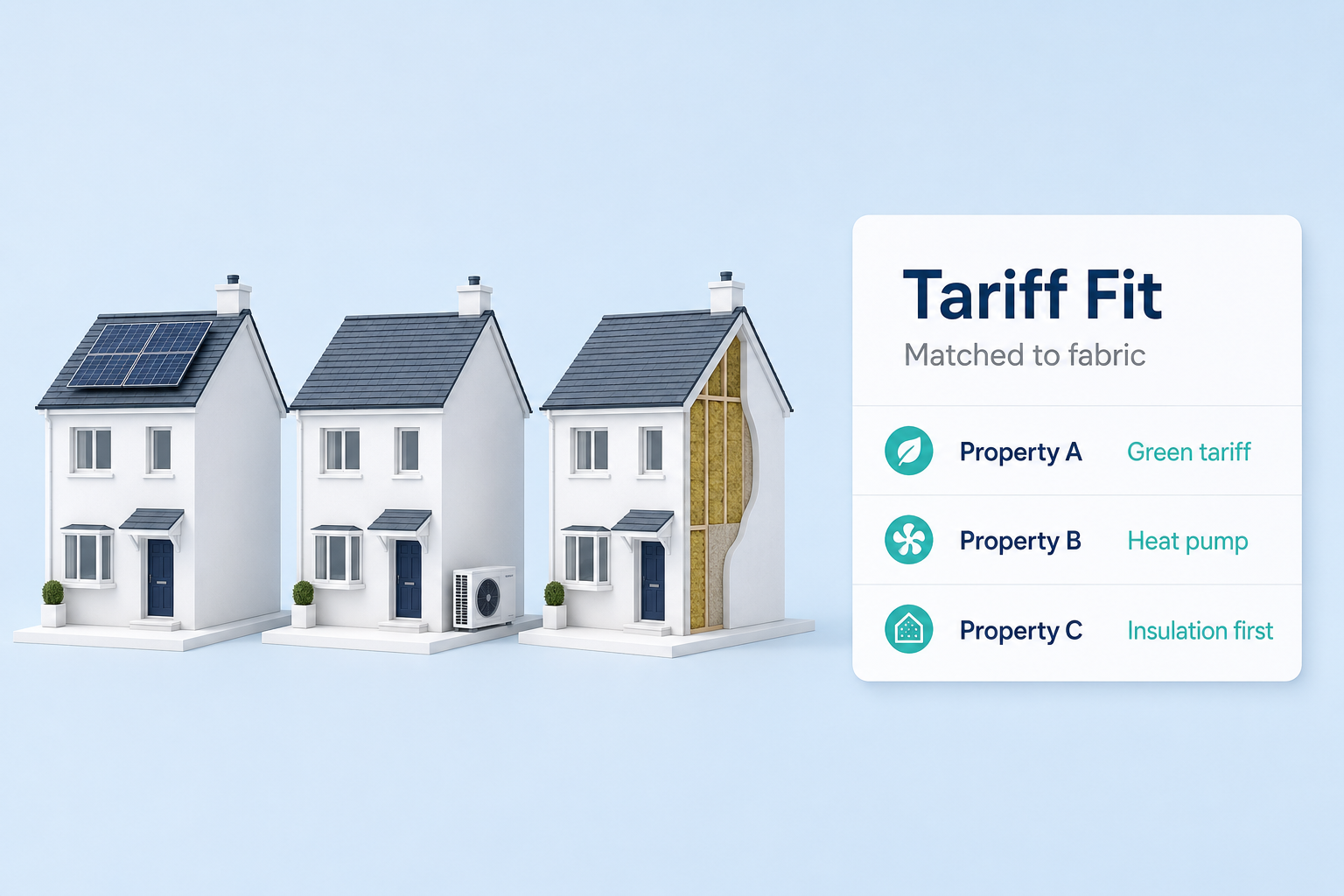
Match the tariff to the property fabric. EPC rating and potential rating, wall and roof construction, insulation, glazing, main heating fuel and system type, so heat pump, solar and green tariff propositions go to the homes that can take them.

Target the switching window at property level. Identify addresses that have transacted or changed occupancy, refreshed daily and matched to UPRN, so acquisition spend goes to the properties in the window rather than at a region.
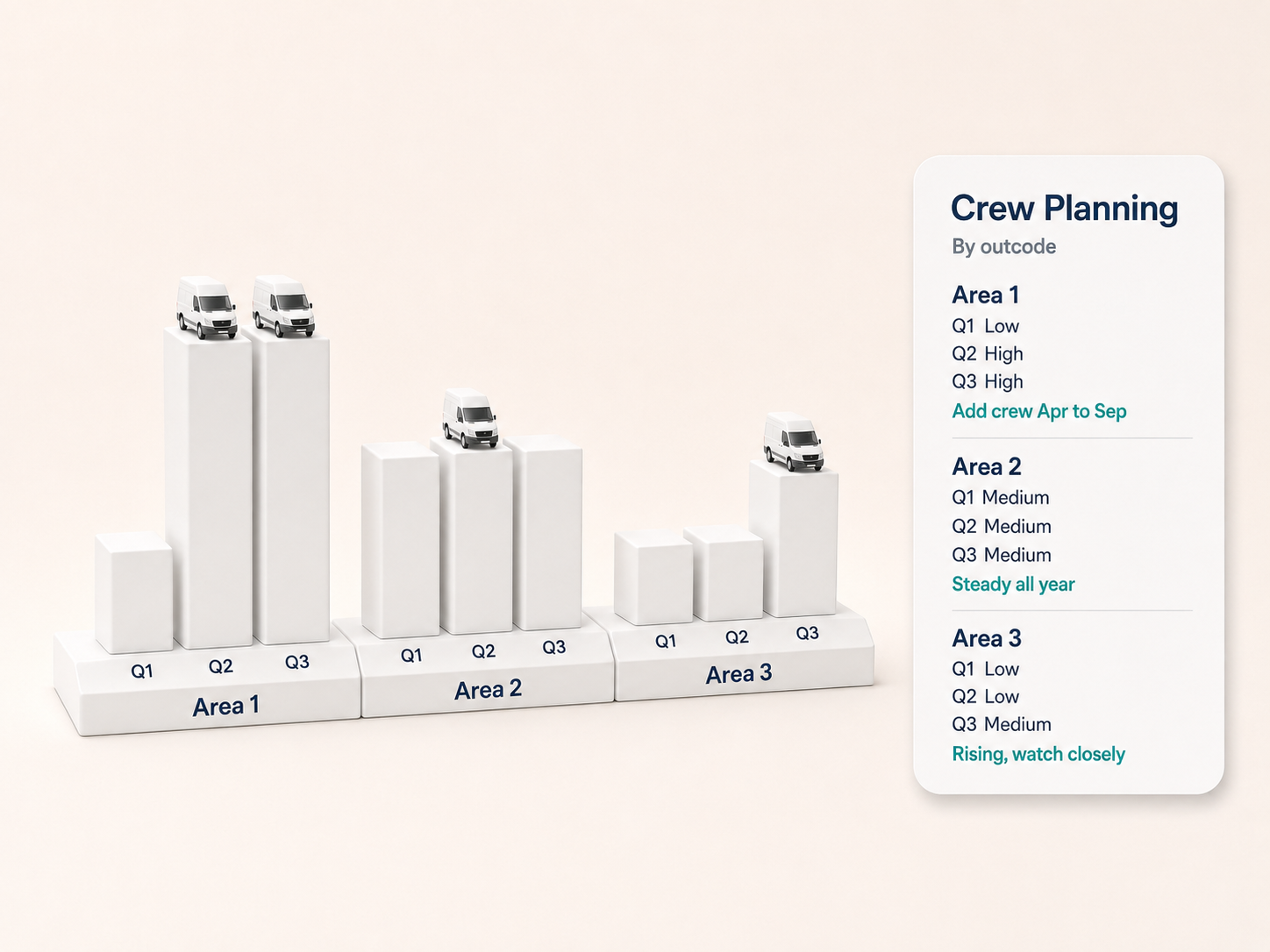
Plan crew coverage against real volume: transaction volume by outcode over time, so you can staff for the areas and the months that actually generate work.

See which agents are selling in your patch: which agents are listing and selling most in your catchment, and where, so you can approach the two that matter rather than all fourteen.

Quote accurately before the survey: property type, bedrooms and floor area for any address, so you can size the crew and the van from the property record rather than from a phone call.

Build a postcode-targeted ad audience: use the address and area data to target Meta and Google campaigns at the streets that are actually moving, rather than an entire town.
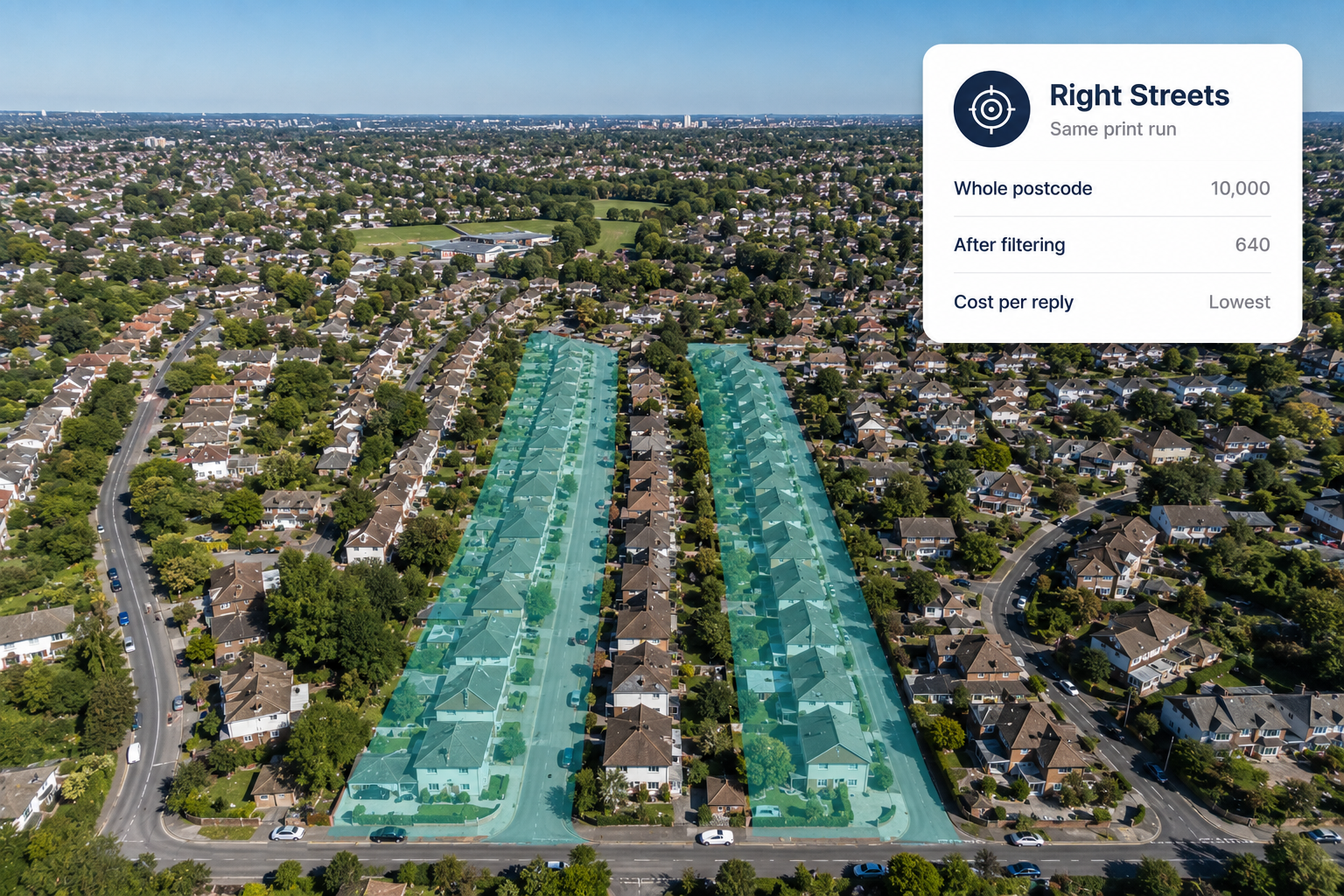
Drop to the right streets, not the whole postcode: export the matching addresses to CSV for your print or door-drop supplier, so the same print budget covers a fraction of the properties and earns a better response rate.
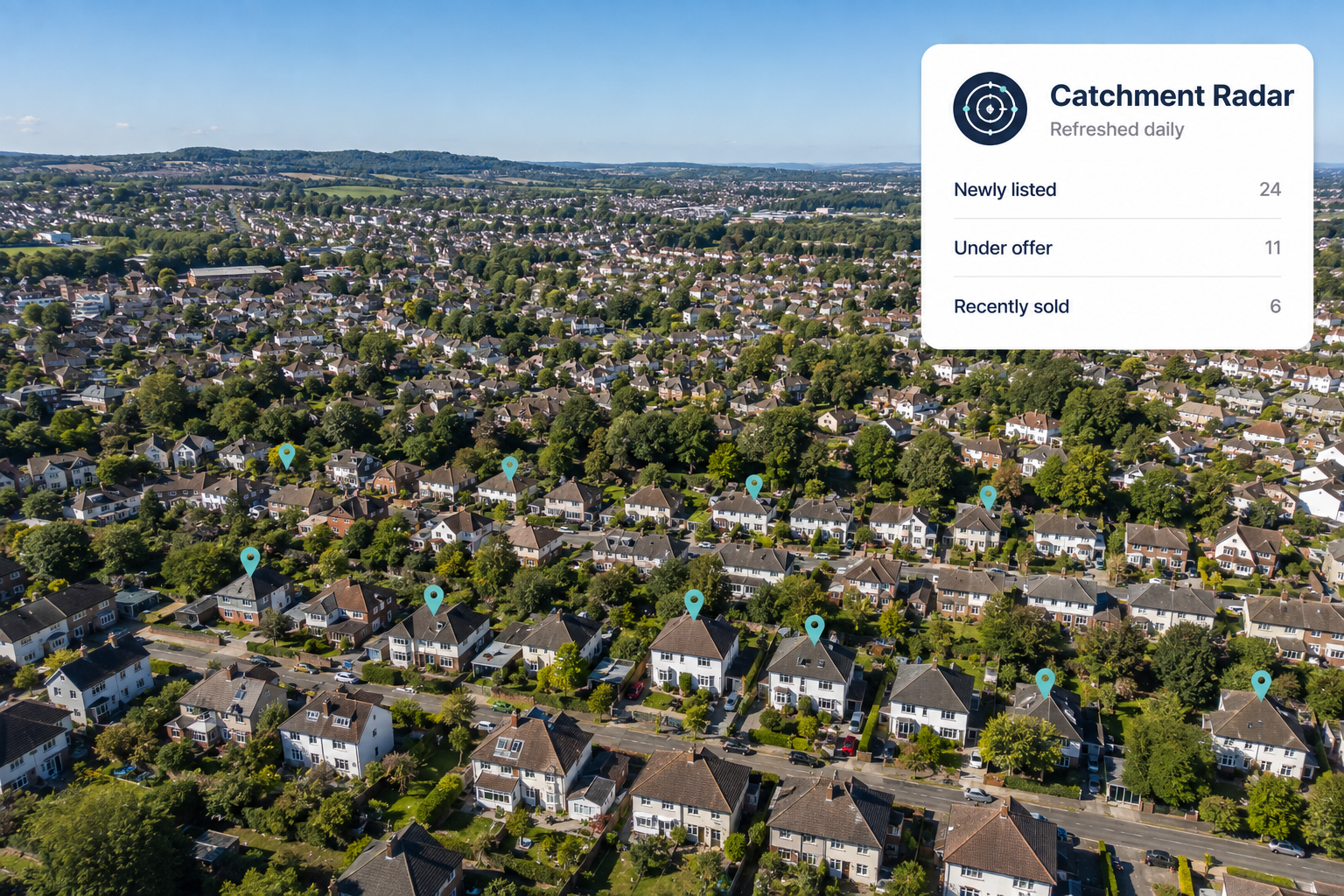
See what is under offer in your catchment: properties in your area currently listed, under offer or recently sold, refreshed daily, so the two-week window becomes something you can act inside rather than hear about afterwards.

MCP-first for Claude, ChatGPT and agents: every endpoint is exposed as an MCP tool, so you drop the data layer into your in-product AI features without writing connectors.

Model gross margin on day one: published per-endpoint pricing and credit-based usage, so a platform serving 10,000 monthly property lookups pays a calculable figure per lookup, before the third vendor renewal rather than after.

The same coverage on every endpoint: every endpoint resolves against the same England and Wales property dataset, so there is no silent gap where valuation returns and EPC does not.

Ship features, not data plumbing: time to first call under ten minutes, an OpenAPI 3.1 spec, MCP tools for Claude and ChatGPT, and copy-paste request samples in ten languages.

Six data contracts become one: swap the Land Registry reseller, EPC vendor, AVM provider, address lookup, market feed and demographics source for one contract. One schema, one invoice, one security review.

Serve Propalt data to your own paying customers: display derived data in your product, cache responses for the contracted period, and sublicense to your users under defined terms rather than bespoke negotiation.

Test demand before you commit to a mix, using demographics, household composition, income and school proximity for the area, so you decide the unit mix on local data rather than on the last scheme that worked elsewhere.
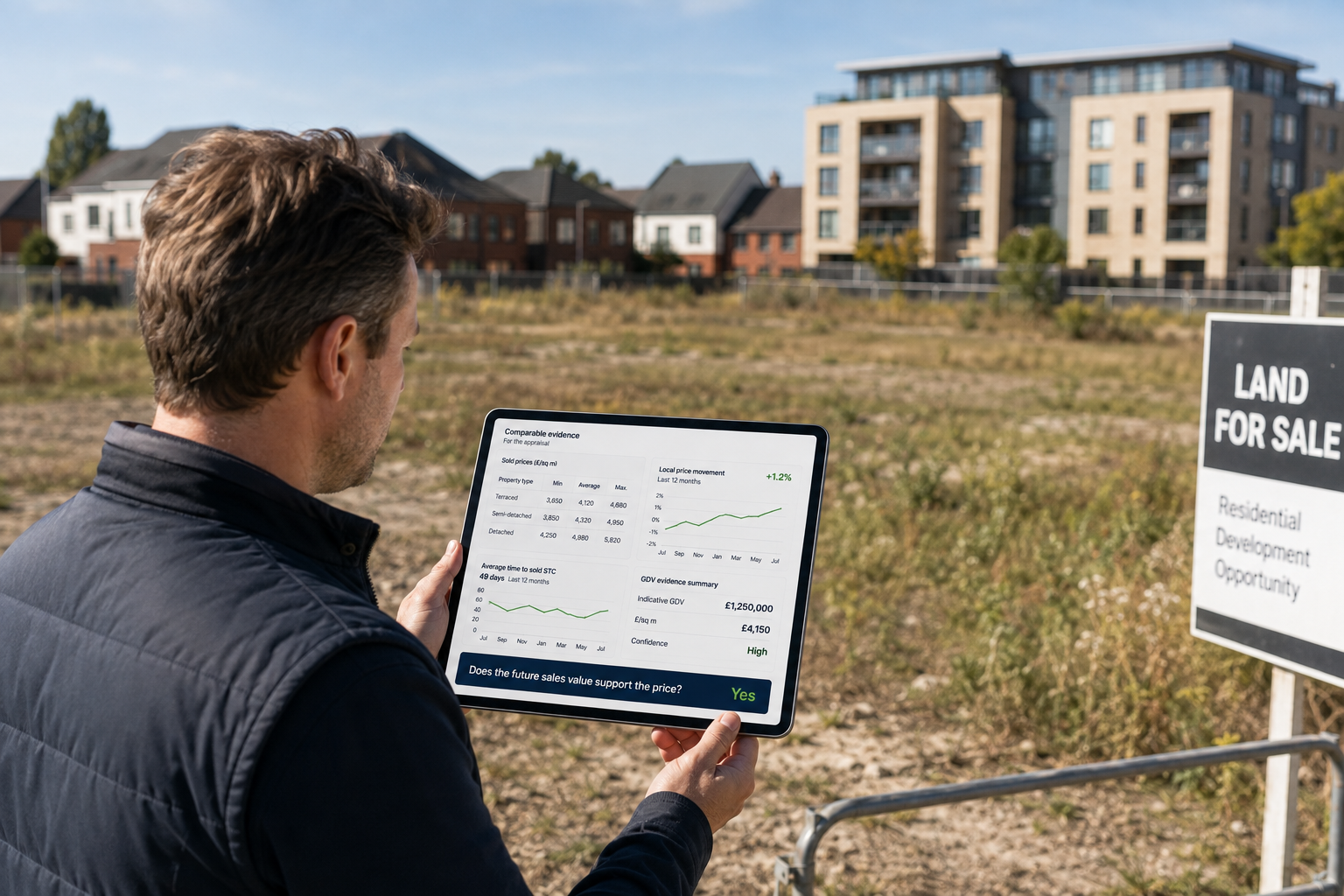
Comparable evidence for the appraisal, drawn from sold prices, achieved values by property type and floor area, local price movement and average time to sold subject to contract, so the GDV line gets evidence behind it.

Screen the constraints before the appraisal, checking active planning constraints, coal area and non-coal mining hazard by coordinate, so you can kill the unviable site in an afternoon rather than after a consultant fee.

Every application on the site, and next door, pulled into one view, with full planning application history plus active constraint records, so lapsed consents and refused schemes tell you what the authority will accept before you commission anything.

Find out who actually owns it by tracing ownership through to the Companies House entity, with linked corporate holdings, so the approach letter goes to a decision maker rather than to an address.
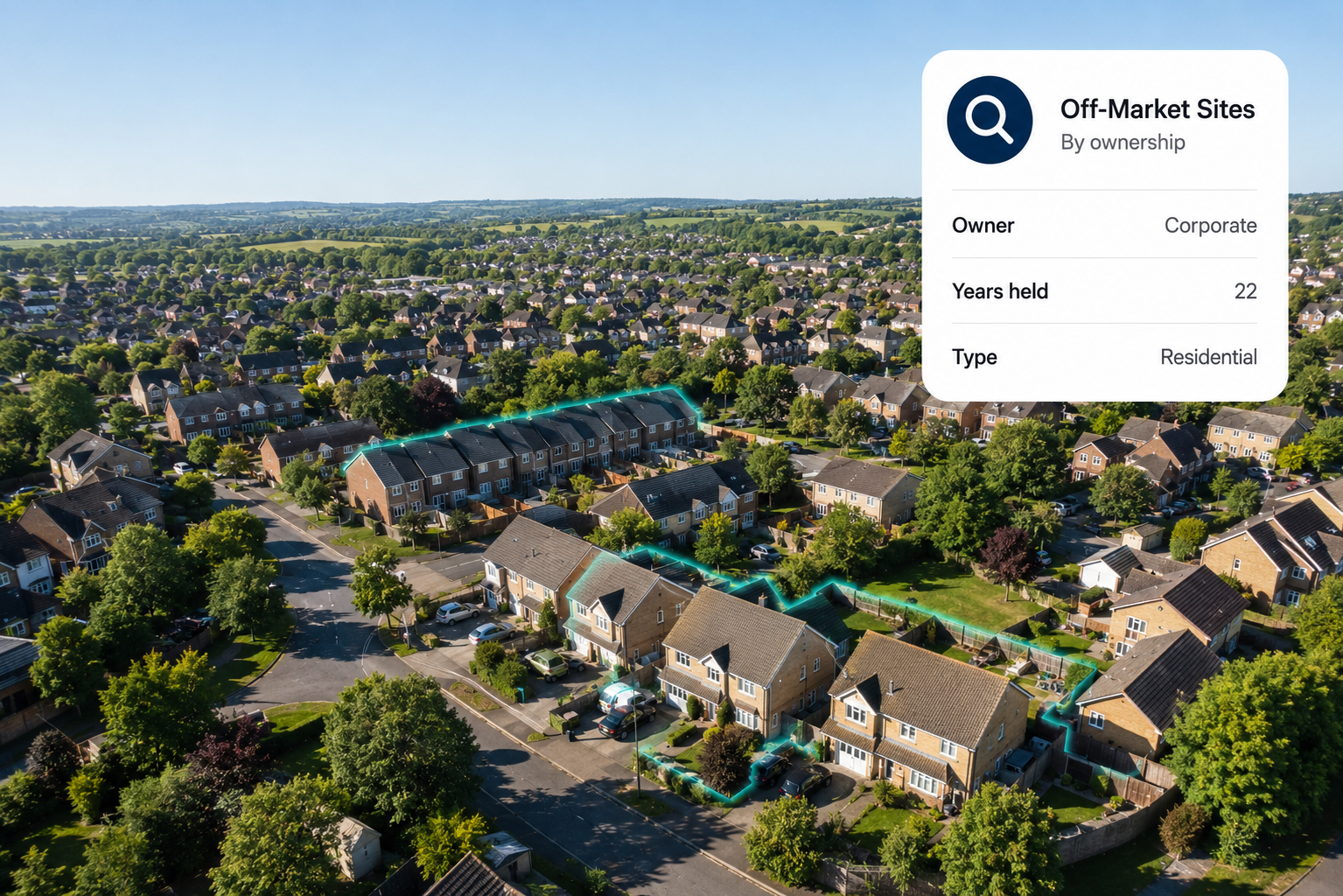
Find sites by ownership pattern, not by listing, by searching an area on tenure, ownership type, holding period and property type to surface long-held plots and corporate-owned assets that have never been marketed.
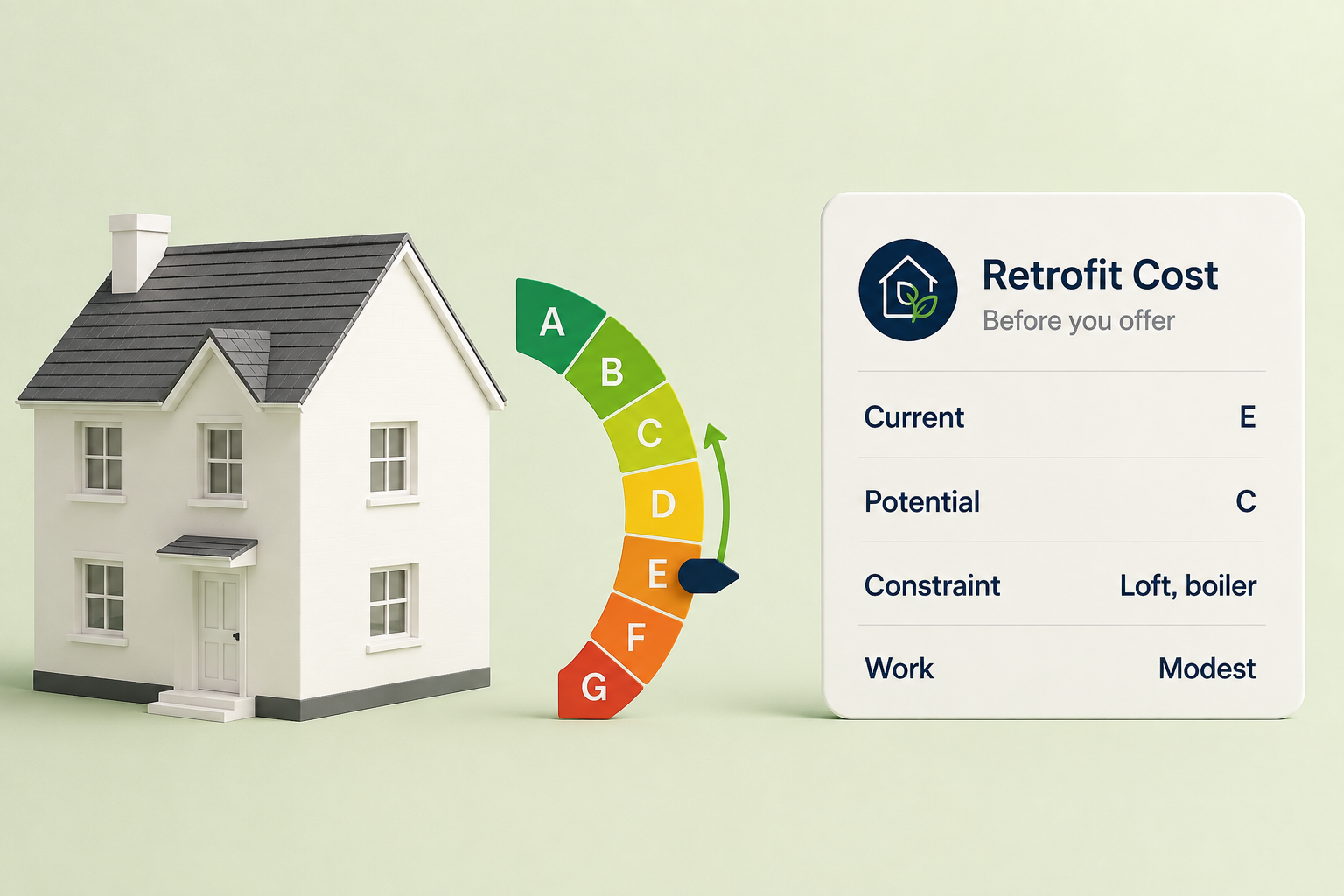
Price the retrofit before you offer: current rating, potential rating and fabric detail, so you know what a property needs to reach the MEES threshold while you can still adjust the offer.
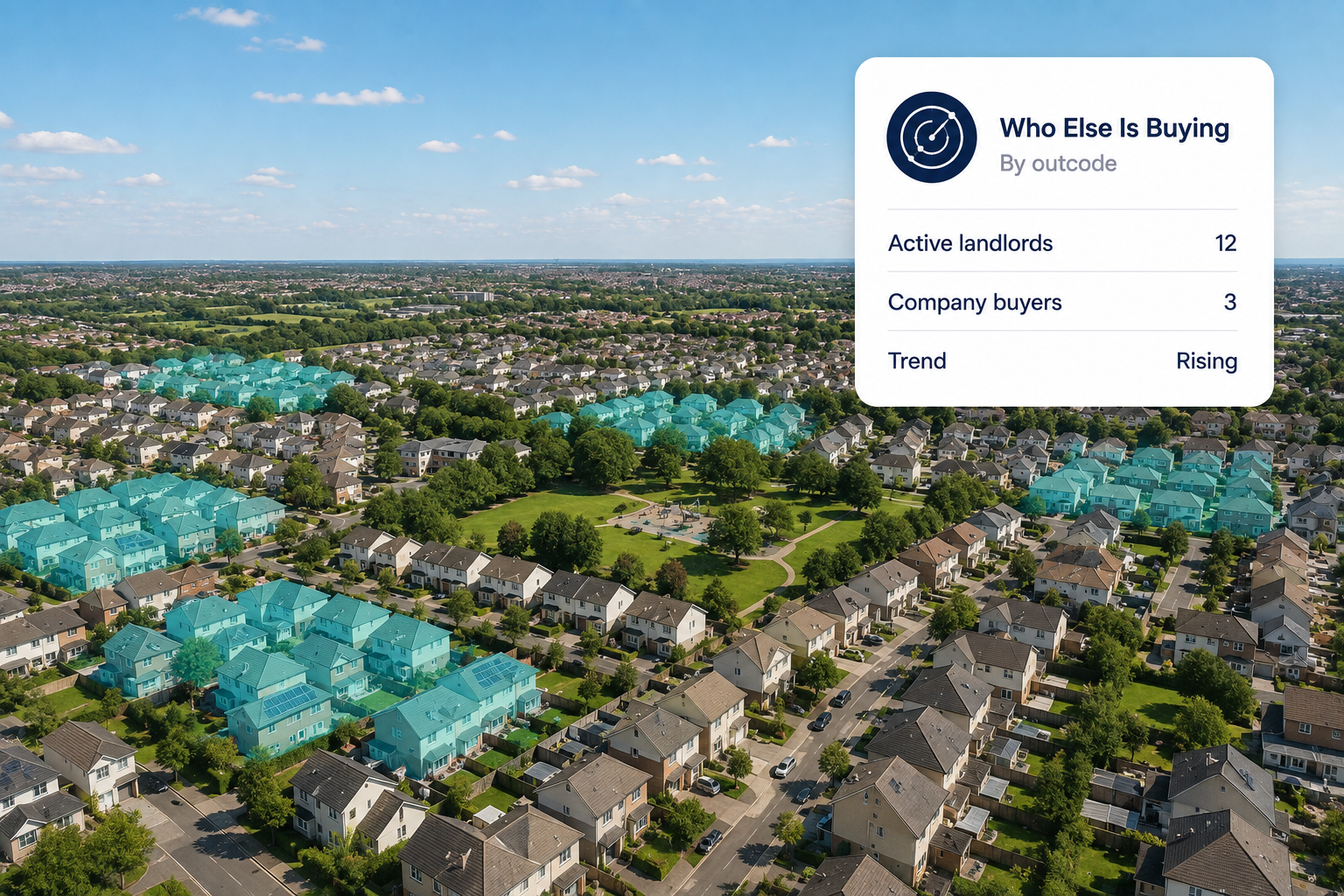
See who else is buying in your area: ownership and portfolio data showing which landlords and companies are accumulating in an outcode, useful for spotting where the money is already going.

Value your own portfolio every month: track estimated value, equity and yield across every property you hold, refreshed regularly, so refinance conversations start from a number rather than from a hope.
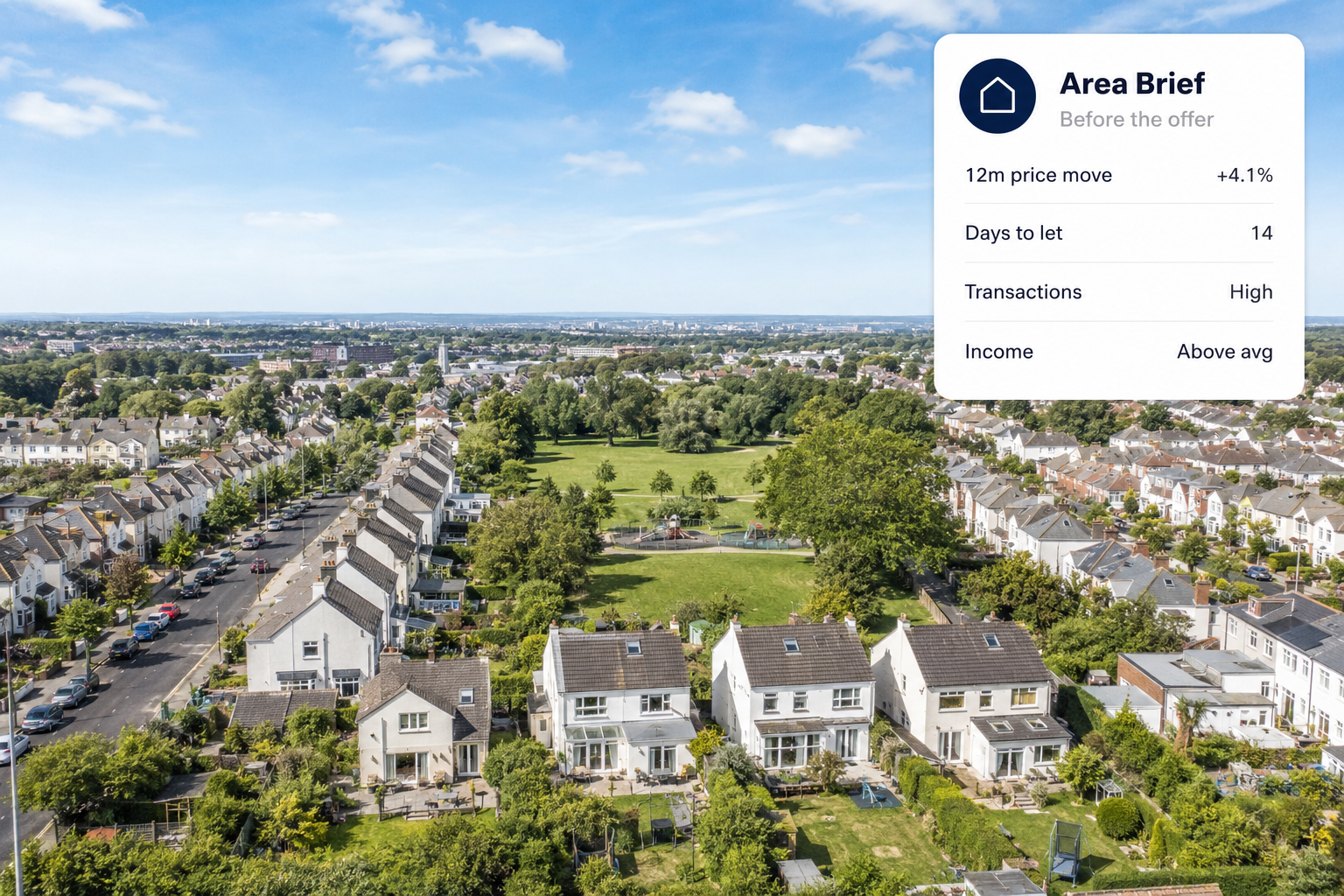
Check the area before you commit: local price movement, letting speed, transaction volume, demographics, income and crime context for the outcode, so you know whether the street is moving before you buy into it.

Rental estimate and gross yield on any England and Wales address: a rent figure with a local demand indicator, and the gross yield against asking or offer price, so there is no calling a letting agent to guess for you.

Search on yield, not on asking price: filter any area of England and Wales by yield threshold, price ceiling, bedrooms, tenure and EPC in one question, so the list that comes back has already been rejected against your own criteria.

Check the property position at claim: confirm construction, tenure, EPC and transaction history at the point of claim, with a record date attached, rather than reconstructing it from correspondence.

Re-score the book against verified attributes: run the in-force book by UPRN and quantify how far the self-reported attributes have drifted from the register position, usually the most persuasive first exercise a pricing team runs.

Fabric, heating and condition indicators: wall and roof construction, insulation present, glazing, main heating system and fuel, and construction age band, so you have the detail behind thermal-efficiency and water-escape exposure.

Coal and mining exposure by coordinate: coal area and non-coal mining hazard checks per location, so screening happens at quote rather than as a manual referral.

Verified attributes as model inputs: bulk retrieval by UPRN for model training and back-testing, so you can test predictive lift against your existing self-reported factors before committing to a pricing change.

Replace the questions with the register: resolve an address and return construction, build-age band, floor area, bedrooms and heating system, so fourteen questions become four, and the four remaining are the ones only the customer can answer.

Stress the book against real local evidence, applying scenarios against actual outcode-level price movement and transaction history rather than a single national assumption.

Versioned endpoints and a documented audit trail, with endpoint versioning and change notice, documented schema, and record dates on every field, so any figure can be reconstructed as at a given date.

Concentration risk at outcode level, mapping exposure against local price movement, transaction volume and time to sold subject to contract, so you see the clustering the regional view hides.
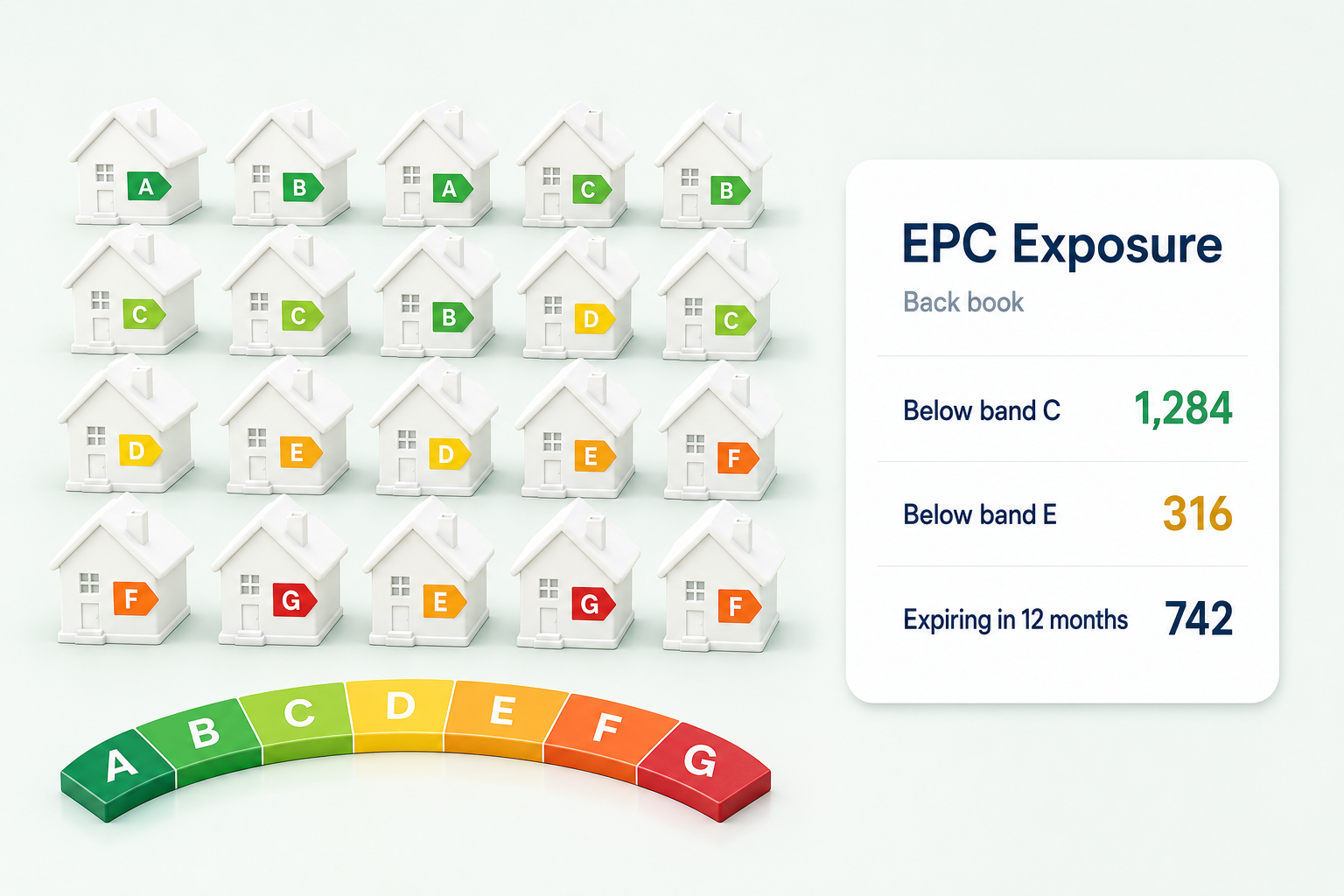
Quantify EPC exposure across the back book, returning rating, score, expiry date and fabric detail per asset, so you can count the assets below the standard and the certificates expiring inside twelve months in one pass.

Alert on drift, not on the calendar, triggering when an asset crosses an LTV threshold or when a nearby transaction moves the local evidence, so detection moves from quarterly to daily.

Revalue the whole book every night, retrieving valuations by UPRN in bulk against the daily refresh, so property-level LTV replaces regional indexation and the exception list is generated rather than estimated.

No integration at all: every endpoint is available as an MCP tool in Claude and ChatGPT, so you ask about an address and get the answer, with no platform work, no contract and a free tier.

Inside the adviser's existing screen: one API and an OpenAPI 3.1 spec, so property data appears in the fact-find rather than in a tool the adviser will not open.
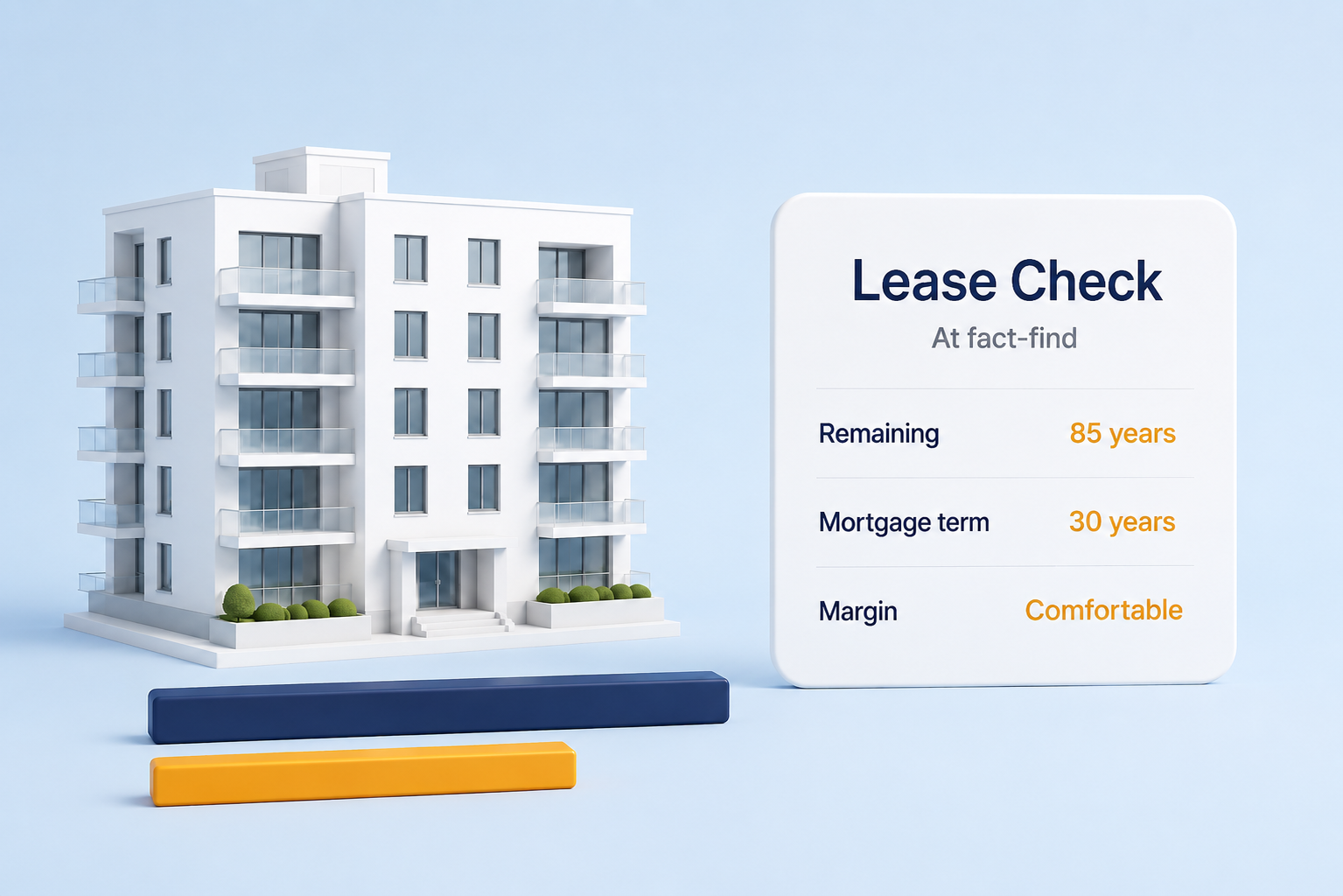
Lease position before the lender raises it: lease records and tenure where held, so the short-lease refusal stops being a week-six surprise.

Rental estimate and gross yield for ICR work: rental estimate, gross yield and a local demand indicator alongside the valuation, so you can test the interest cover ratio before the lender's calculator does.
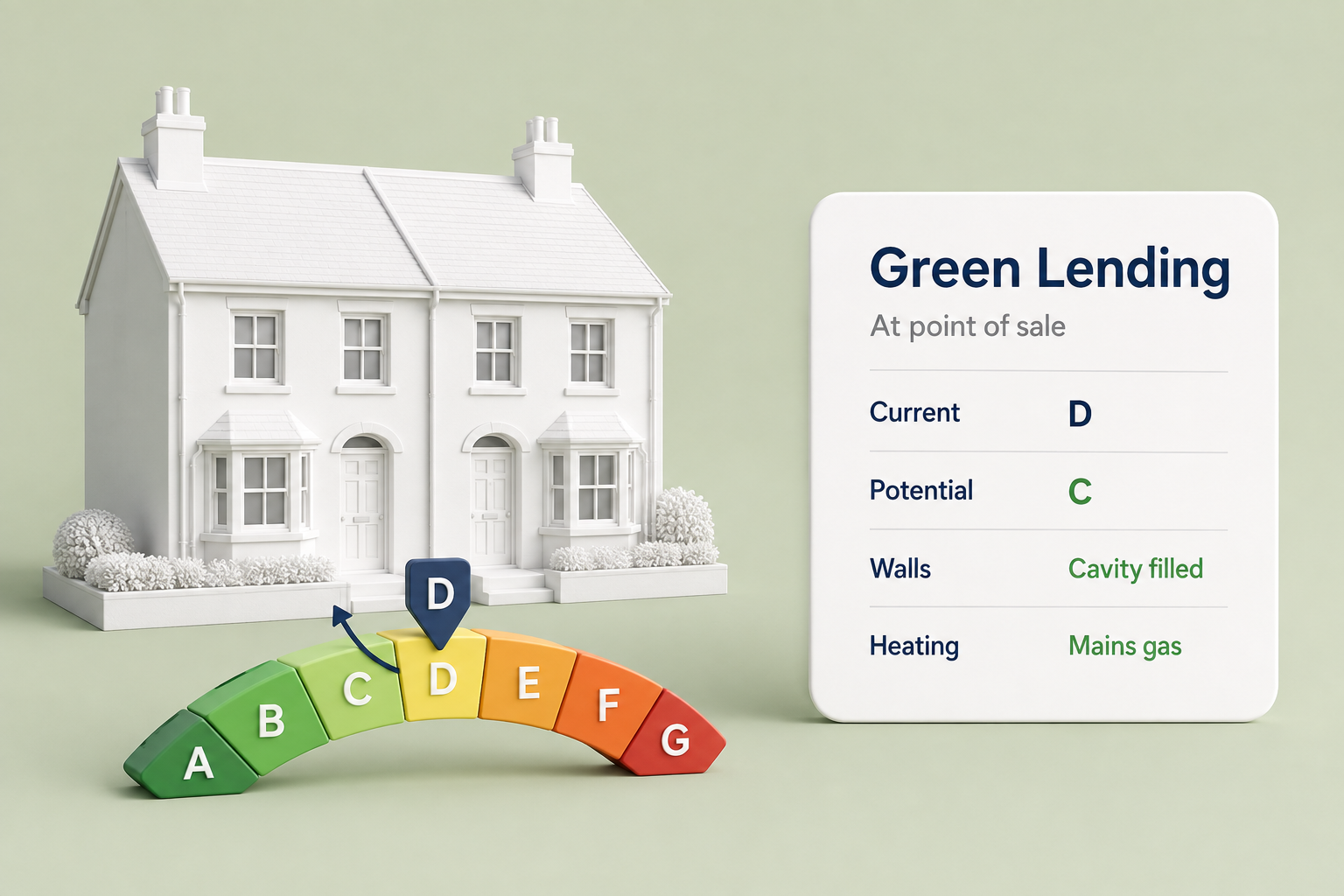
EPC and fabric at point of sale: current rating, potential rating, wall and roof construction, heating system and fuel, so you can match the client to green product criteria without waiting for the survey.

Flag valuation risk at fact-find by returning an automated valuation with a confidence band and comparable count against the purchase price, so the cases where the gap is wide enough to need a conversation surface before submission.

Inside the system your team already uses, with one API and one contract for your case management vendor to integrate, so fee earners see the data in the matter rather than in another browser tab.
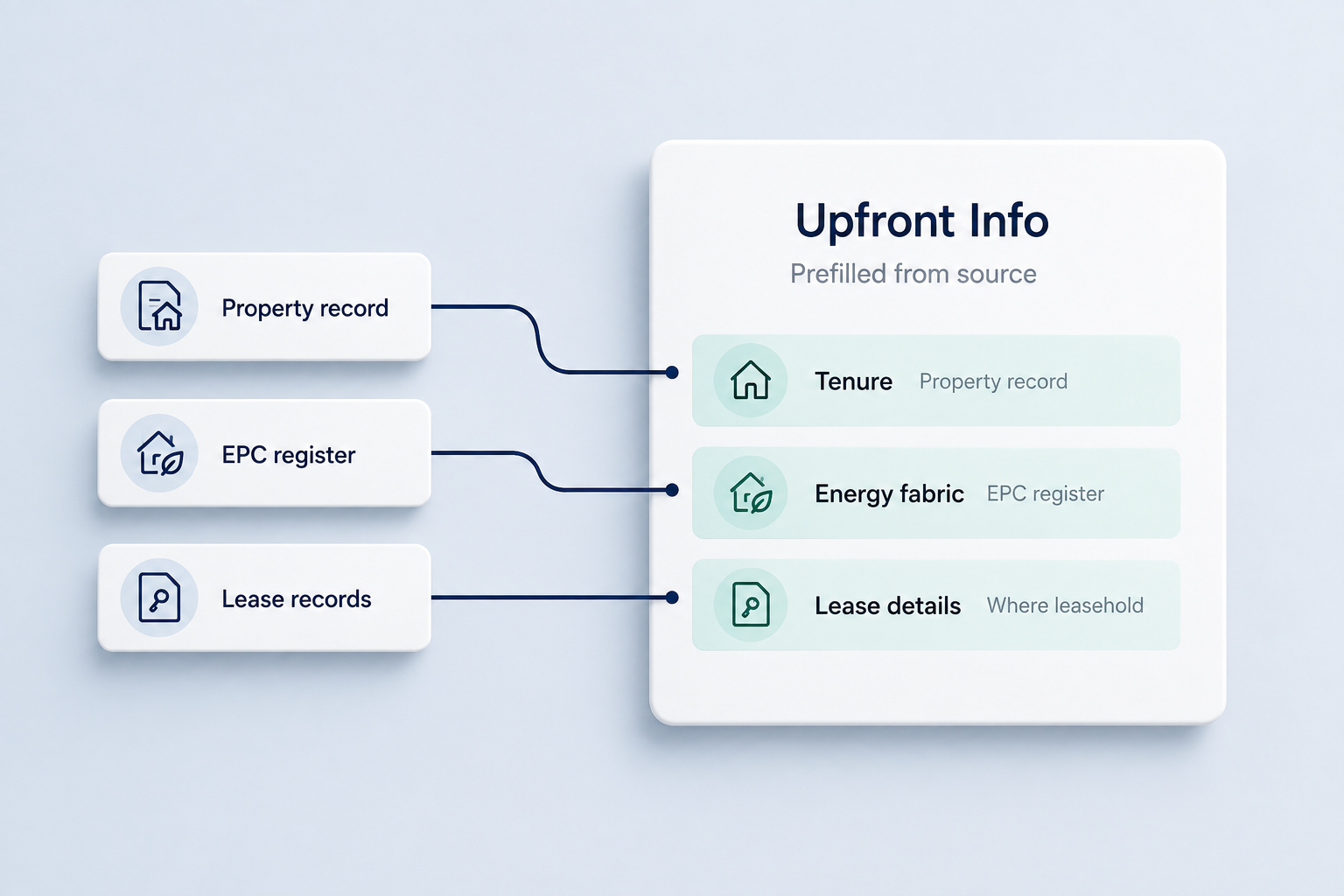
Populate upfront disclosure from register data, pre-filling the property-level fields the material information regime expects, straight from register sources, rather than chasing the agent.

Coal, mining and environmental exposure indicators, using coal area and non-coal mining hazard checks by coordinate, giving you indicative screening that tells you which files need the full specialist report.

Planning history and live constraints for the address, including applications on the property and active constraint records next door, which is where the awkward enquiries usually come from.
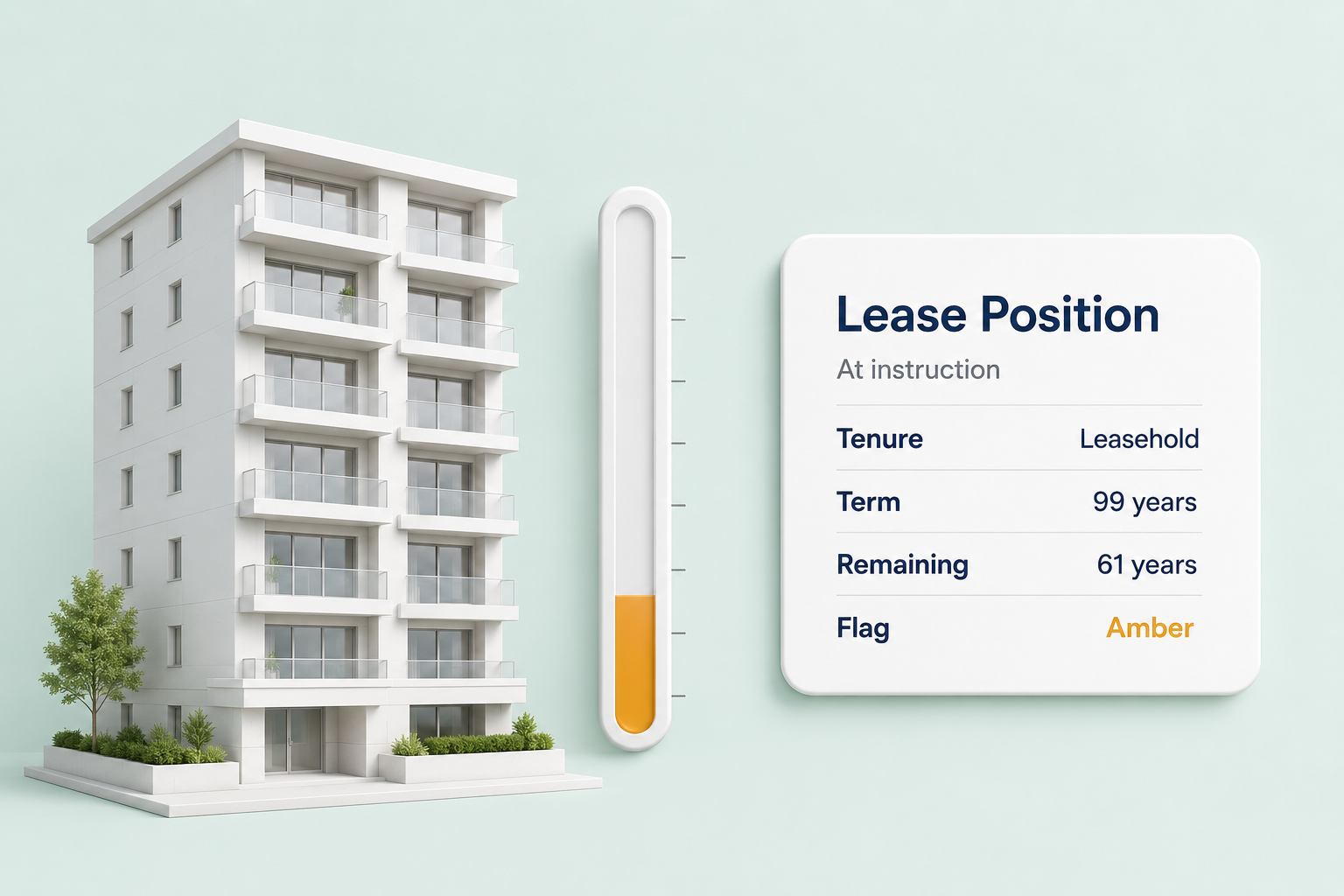
See the leasehold position early, with lease records where they are held set alongside tenure and ownership structure, so short-lease problems surface at the start of the file rather than after the buyer's lender raises them.

Score the file before you open the matter, running any address against tenure, planning, constraint and ground-risk indicators at instruction so the files that need an early client conversation get one, rather than a late one.

Local market movement, quantified: monthly and quarterly data for the outcode covering price movement, average days to sold subject to contract and asking-to-sold ratio, the paragraph that justifies the figure.

Straight into your report template: structured output that maps to the practice's existing template or case management system, so one request replaces six tabs.

Tenure, leasehold terms and ownership structure: freehold or leasehold, lease records where held, corporate ownership traced through Companies House, useful on retrospective and probate instructions where the history is the question.

Coal, mining and constraint checks in the same request: coal area status, non-coal mining hazard and active planning constraints for the address, so you flag the ground risk before the inspection rather than in the caveats.

EPC, fabric and heating before you see the building: wall construction, insulation present, roof and glazing type, main heating system and fuel, current and potential rating, so you know what you are looking at while you are still parking.

Comparables with the provenance attached: sold prices, dates, property type, floor area and distance from the subject, each traced to HM Land Registry, and filterable on type and size so the set you cite is the set you would have chosen.

Benchmark any branch against its own catchment, comparing its rents, prices and stock turnover to the wider outcode every week, in one question.

Fill the gaps in the records you already hold, appending the EPC rating, tenure, last sold price and portfolio size to existing contacts so the database stops ageing the moment it is connected.

Narrow the 20:20 list before the print order, building an audience on propensity, tenure, holding period and recent planning activity, then exporting straight to CSV for the mail house or the CRM.

Walk in knowing more about the property than the vendor, with tenure, the last sold price and date, the EPC and its expiry, planning history and previous listings drawn together in one question.

Build the valuation brief before you get in the car, with comparable sales, the asking-to-sold ratio, market speed and the school catchment for the exact address, pulled in one question.
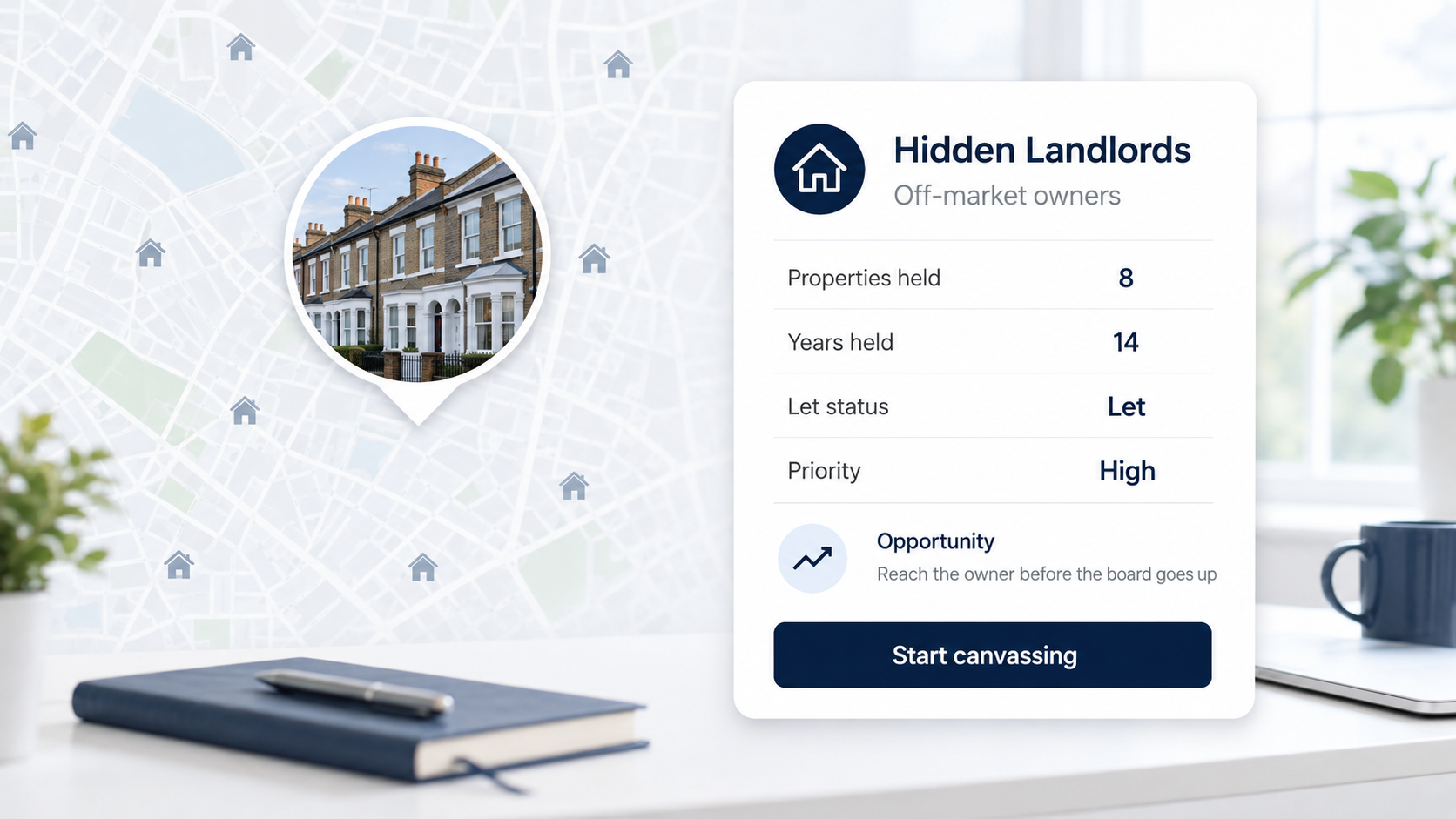
Find the landlords behind the doors you already knock, plus the owner-occupiers showing signs of selling, from real ownership records in any outcode, in one question.

Surface leasehold, EPC and recent-price-change risk on each known link in a chain so an agent can anticipate fall-through risk early.

Map what a first-time buyer can realistically afford by type, beds and postcode — with HPI trajectory and area income context — from a budget and target area.

Identify the three strongest-performing streets in a postcode by price per sq ft and HPI — local intelligence to sharpen any valuation pitch.

Scan an area for properties that have taken their first price reduction in the last two weeks and arrive at the vendor briefed with comparables.

Generate a side-by-side new-build versus resale comparison for a buyer — price per sq ft, EPC, area HPI and running costs — in a shareable report.

Track SSTC listings in an area, flag the ones running behind local completion times, and prompt proactive vendor calls before a fall-through.

Surface properties withdrawn from sale in the last six months and draft personalised, data-led re-engagement letters for each vendor.

Build a calm, evidence-led pricing brief before a vendor meeting: HPI trend, sold comparables, the cost of overpricing, and a recommended corridor with the confidence position attached to it.

Surface long-tenure freeholds with no current listing in a target area and rank them into a data-backed door-knocking list.

Diagnose why a listing has gone stale — price, EPC, market movement — and draft a vendor price-reduction brief with fresh comparables.

Monitor monthly market data for cooling signals — rising days-to-sale, more reductions, falling volumes — before competitors notice.

Auto-generate a social post, mailing-list email and WhatsApp message — with live market context — for every new instruction.

Enrich a basic property spec with live school, broadband, crime and commute data to write compelling, searchable listing copy.

Rank investment postcodes across a region by yield, HPI growth and demographic demand for investor content and events.
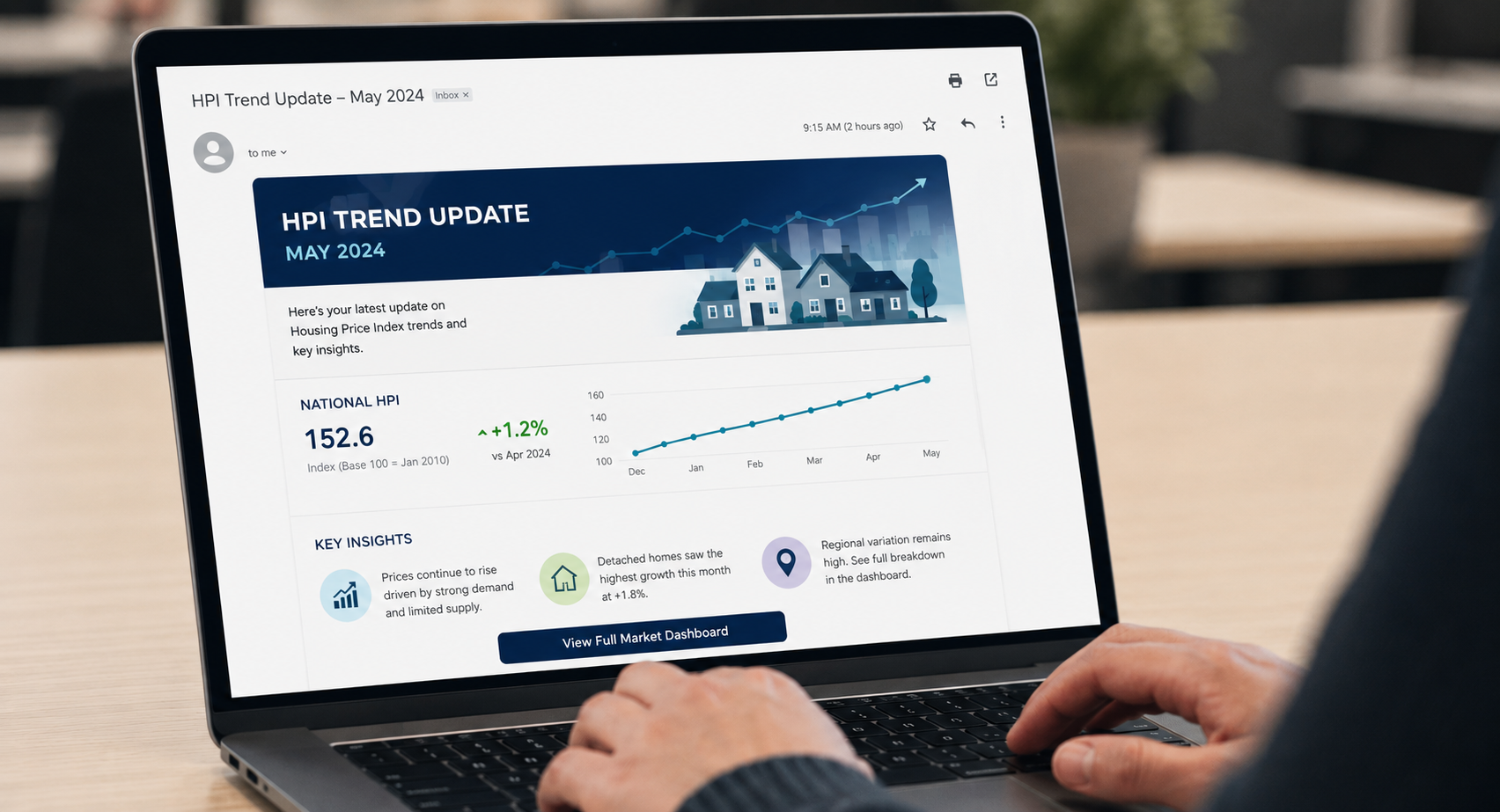
Produce a branded quarterly HPI newsletter covering local house price movements, ready to send to a mailing list.

Benchmark competing active listings in an area, or just one rival agent's, on price per square foot, EPC, tenure and days on market, with the subject property in the same table.

Generate a localised area-guide brochure section — schools, broadband, crime, commute and demographics — for any property.

Generate a 'who lives here' demographic brief for any postcode so listing copy speaks to the right buyer.

Turn live monthly and quarterly market data into five ready-to-post, locally-angled social stories each week.

Surface properties with disabled-access features in any area for specialist lettings and local authority housing teams.
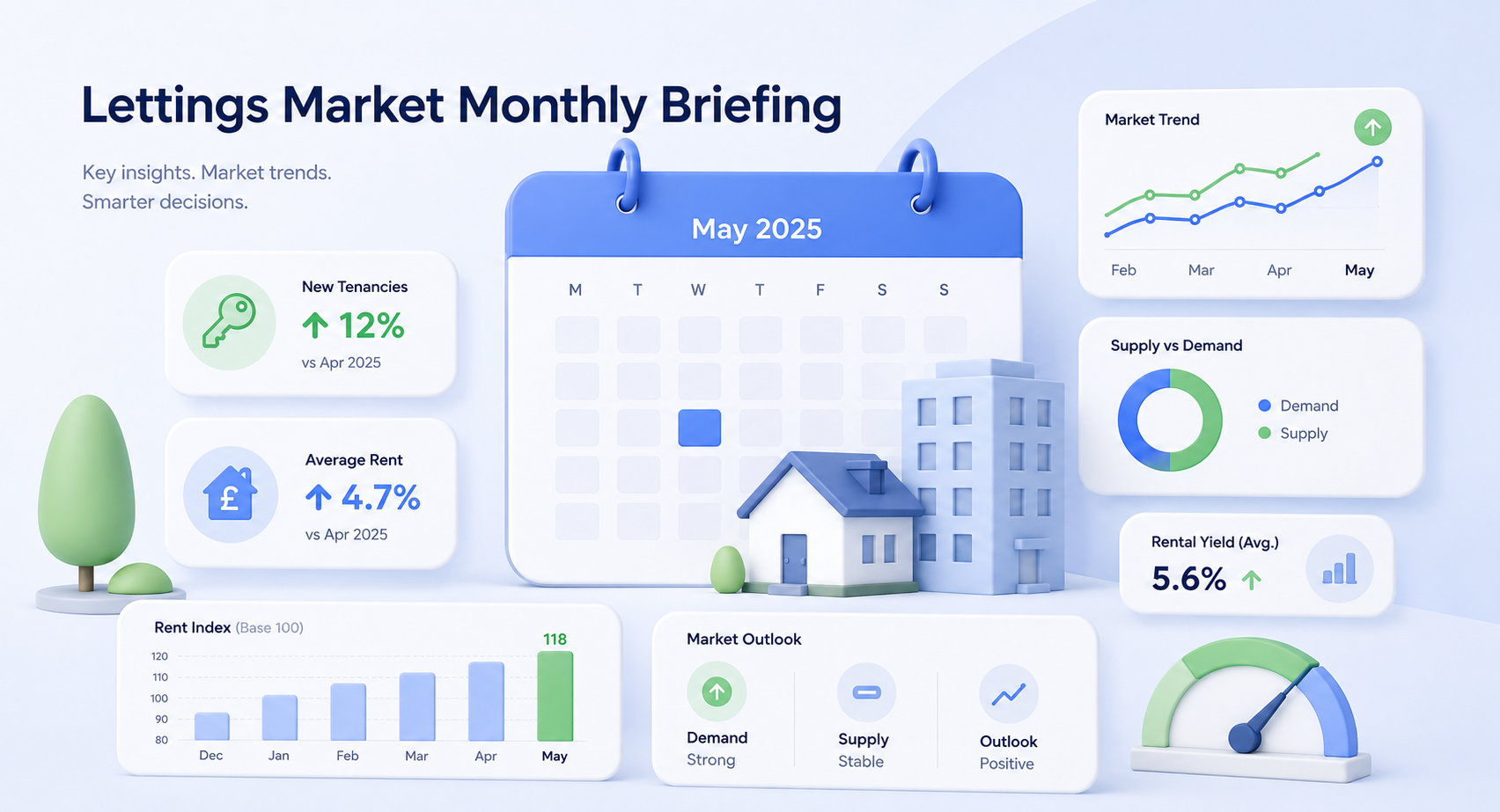
Auto-generate a monthly landlord market briefing: new listings, let-agreed volumes, average rents, days-to-let and a national comparison.

Cross-reference renewal rents against local comparables to flag tenancies at risk of departure before the letter goes out.

Profile a postcode for student demographic density, HMO data and university proximity to target a student lettings book.

Benchmark a portfolio's days-to-let against local averages by property type and flag slow stock for a pricing conversation.

Calculate gross and indicative net yield for any address and benchmark it against local comparables for investor advice.

Map rental demand by bedroom count, property type and price band across an area to set pricing and advise on what to buy.

Identify rental properties re-listed after a void of four-plus weeks and surface them as management-pitch leads.

Flag properties with HMO potential and calculate room-by-room rent uplift versus single-let yield, backed by area demand data.

Produce a one-page doorstep rental appraisal with predicted rent, comparable lets, area demand and broadband speed.

Generate a demographic context brief for any rental area to calibrate right-to-rent checks to the local tenant population.
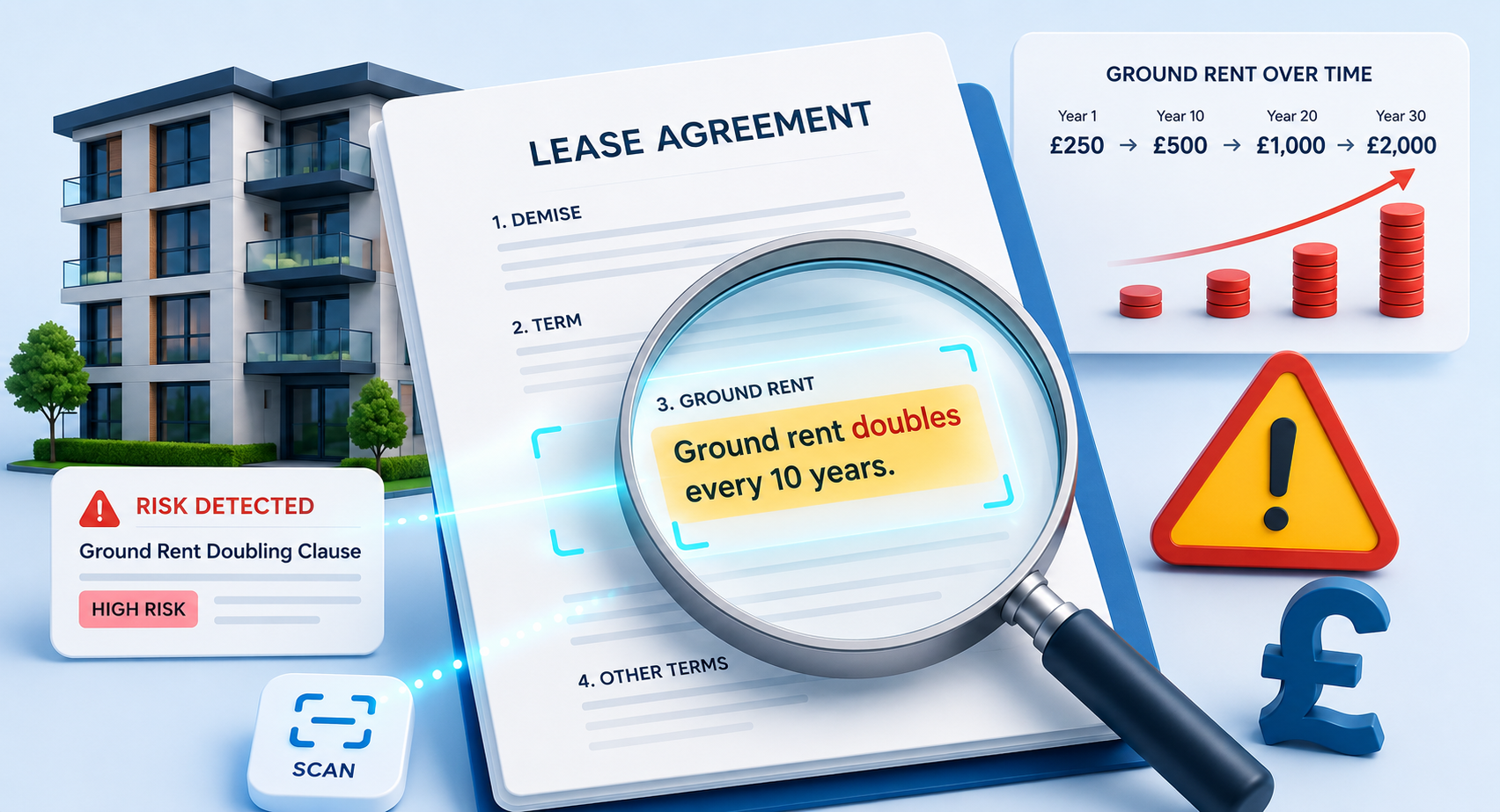
Scan a leasehold portfolio for doubling or RPI-linked ground rent clauses and flag properties approaching lender thresholds.

Cross-reference local median income against a proposed rent to rate affordability and reduce void risk before pricing.

Track an entire portfolio against current and projected MEES thresholds and produce a prioritised compliance roadmap with cost estimates.

Surface a property's full transaction history — prior sales, price changes, leasehold events — to flag title, gazumping or disclosure issues.

Flag income-to-price divergence and transaction anomalies for any postcode to support a risk-based AML approach.

Generate a tribunal-ready Section 13 rent-increase pack with comparable evidence, market narrative and a tenant cover letter.

Run a one-click flood, coal, mining and radon risk check for any UK address and produce a client-ready risk summary.

Surface lease length, ground rent structure and mortgage-ability risk for any flat or leasehold property before it goes to market.

Scan a portfolio or local area for D–G EPC-rated rentals and estimate the cost and rent uplift of upgrading ahead of MEES deadlines.