Tenure changes the figure, so it should not be the last thing you confirm
Why leasehold terms and ownership structure belong at the front of the instruction.
Propalt Team · For surveyors
Tenure is not a footnote to a valuation. It is one of the inputs that sets it. A short lease, an onerous ground rent or a corporate owner sitting behind the title can each move the figure and change the advice, and each of them is easier to establish at the start than to unpick at the end. Yet tenure is often confirmed late, once the inspection is done and the number half-formed, which is precisely when a surprise in the title is most expensive.
The reasonable objection is that the official copies from the register are the definitive source, and that a valuer should rely on the client's legal team for the title position. That holds. This check does not replace the official copies or the conveyancer's work. It gives you the tenure and ownership picture early enough to shape the valuation and to know which questions to put to the legal team, rather than waiting on them to surface an issue you could have anticipated.
The history is often the question
On a straightforward owner-occupier valuation, tenure may be a quick confirmation. On retrospective and probate instructions it is frequently the whole point. When you are valuing as at a past date, or establishing an estate's position, the ownership history and the lease terms are the substance of the exercise, not background to it.
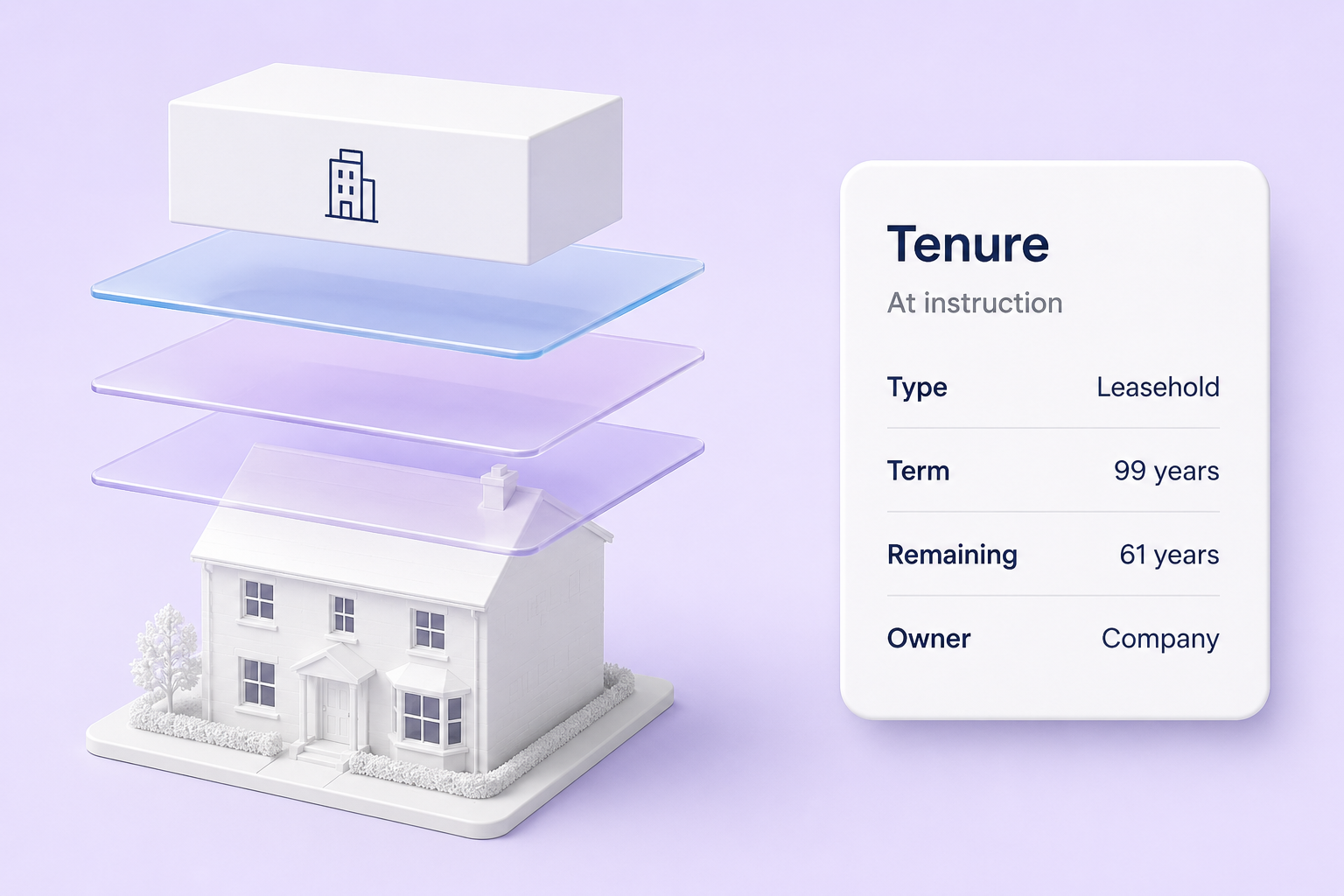
This skill returns whether the property is freehold or leasehold, the lease records where they are held, and the ownership structure, including corporate owners traced through Companies House. Where a company holds the title, seeing that structure early tells you whether you are dealing with a single asset or one property within a corporate portfolio, which changes both the enquiries you make and how you read the transaction history.
| Title field (illustrative) | Recorded value |
|---|---|
| Tenure | Leasehold |
| Lease term / remaining | 99 years / 61 remaining |
| Registered owner | Company |
| Companies House link | Active, one director |
The fields above are illustrative. The value is in having tenure and ownership in front of you before the valuation takes shape, so the figure is built on the correct basis from the start.
Fewer surprises at the report stage
A tenure position confirmed early is a report written once. When you already know the lease is short or the owner is a company, you frame the valuation, the assumptions and the special assumptions accordingly, and the legal enquiries you raise are targeted rather than reactive. The alternative, discovering a tenure issue after the figure is drafted, means revisiting the reasoning at the point it is hardest to change.
On a probate or retrospective instruction, the title history is not context for the valuation. It is the valuation.
Establish tenure first, and the rest of the report follows cleanly from it.
Confirm the tenure before you set the figure.
Try the Tenure and ownership check → · propalt.ai
Tenure, leasehold and ownership data is drawn from HM Land Registry, Companies House and the Propalt intelligence layer. Figures shown are illustrative. This article is general information for surveying professionals.
Tenure and ownership check
Returns freehold or leasehold status, lease records where held, and ownership structure including corporate owners traced through Companies House.
🎯 Best used for
Retrospective and probate instructions where history matters
🔌 Propalt APIs used
get_leaseholds get_property