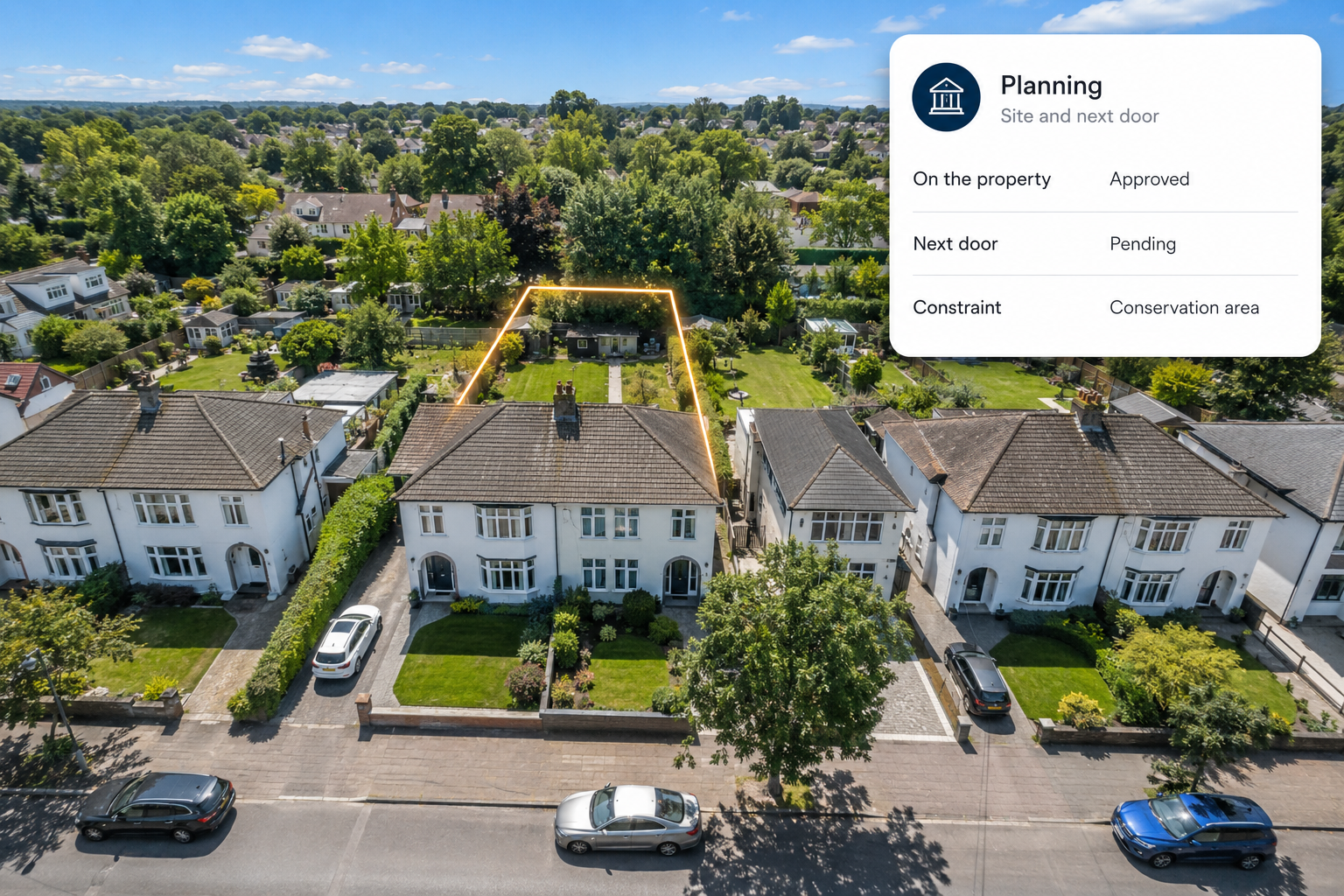
The planning problem is often on the other side of the fence
Why the address alone does not tell you the whole planning story.
Propalt Team · For conveyancers
Planning enquiries have a habit of arriving late and landing awkwardly. An extension on the property with no completion certificate. A conservation area designation the seller never mentioned. And the classic one that arrives at exchange: a large application next door that the buyer only discovers when a neighbour mentions the site notice. The property itself checked out. The context did not.
It would overstate things to say a quick check answers every planning question. Local authority records vary, and some issues only emerge through formal enquiries and the seller's replies. What a fast check does give you is the shape of the planning picture on day one: what has been applied for on the property, and what constraints are active in the immediate area. That is usually enough to know which files need a harder look and which questions to ask first.
The property and the ground around it
A planning history check reads applications recorded against the address and sets them next to active constraint records nearby. On the property, that means recent or pending applications you will want to reconcile with what you can see and what the seller has disclosed. Nearby, it means the constraints and applications that affect value and enjoyment without appearing on the title at all.
The neighbour dimension is the one that catches files out. A buyer is entitled to know if the plot behind the garden has a live application for flats. Surfacing that early turns a difficult exchange-day surprise into an ordinary enquiry you raised weeks before.
| Item (illustrative) | Location | Status | Relevance |
|---|---|---|---|
| Rear extension | Subject property | Approved | Check completion evidence |
| Conservation area | Subject property | Active | Note in report |
| Flats scheme | Adjacent plot | Pending | Raise with buyer early |
The table is illustrative. The value is that the picture covers the address and its surroundings, so the enquiry gets raised on your timetable rather than a neighbour's.
The enquiry you raise, not the one raised on you
Material information duties expect planning matters that affect a buyer's decision to be surfaced clearly. Under your SRA or CLC obligations, the safer position is always the one where you identified the issue and put it to the seller, rather than reacting to something the buyer found. An early planning read lets you frame the awkward point calmly and in good time.
The application that breaks a sale is rarely on the title. It is on the plot next door.
A planning check does not stop the neighbour building. It means your client knew, and you asked, long before it mattered.
Check the ground around the property, not just the property.
Try the Planning history check → · propalt.ai
Planning application and constraint data is drawn from local planning authority records and the Propalt intelligence layer. Figures shown are illustrative. This article is general information for conveyancing professionals.
Planning history check
Returns applications recorded on the property alongside active constraint records nearby, including next door, so the planning enquiries that catch files out are visible early.
🎯 Best used for
Surfacing planning risk on and around the address
🔌 Propalt APIs used
get_planning_applications get_planning_constraints