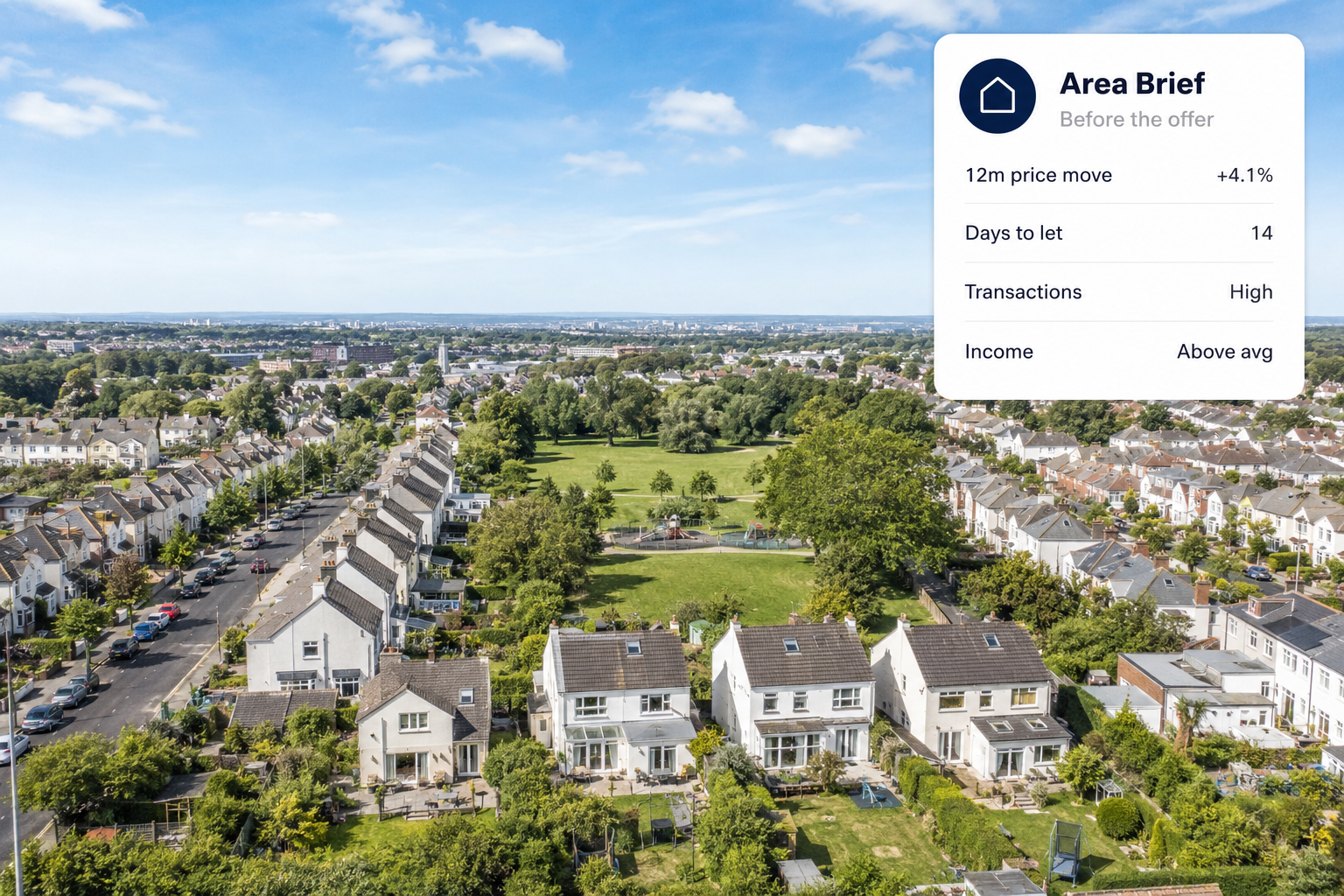
You are not buying a property. You are buying an outcode.
Price movement, letting speed, transaction volume, demographics, income and crime context for an outcode, assembled before an offer rather than after a survey.
Propalt Team · For property investors
A good deal in a stalling area is a worse deal than a fair deal in a rising one. The property gets the attention because it is the thing you view, but the return over a hold period is set by the outcode around it. Rent growth, resale liquidity and void risk all live at the area level, not the address level, and none of them show up on a floor plan.
The trouble is that area diligence is usually the last thing anyone does, if it happens at all. You find a property, you like it, you offer, and only after the survey do you start asking whether people actually want to live on that street. That is the wrong order. The area check is cheap and fast, and it belongs before the offer, because it is the thing most likely to change your mind.
Six signals that tell you whether the street is moving
An area brief pulls the outcode-level signals into one view so you are not stitching together a council report, a portal search and a half-remembered conversation. Price movement tells you the direction of travel. Average days to let agreed tells you how liquid the rental market is, which is your void risk in a single number. Transaction volume tells you whether there is a real market to sell into later or a thin one where you set the price by leaving.
Demographics, income and crime context fill in the demand picture. Who lives there, what they earn, and how the area reads on safety all shape which tenant profile you are underwriting and how sustainable the rent is. A rent that sits comfortably against local incomes is a rent that survives a downturn. A rent that stretches the local pay packet is a rent that comes under pressure the moment the market softens.
| Outcode (illustrative) | 12-mo price move | Avg days to let | Transactions | Income context |
|---|---|---|---|---|
| Outcode A | +4.1% | 14 | High | Above area avg |
| Outcode B | +1.2% | 28 | Moderate | At area avg |
| Outcode C | -0.8% | 41 | Low | Below area avg |
The figures are illustrative. Read across Outcode C and the picture is consistent: prices soft, lettings slow, few transactions and stretched incomes. That is an area to walk away from, whatever the property looks like.
Know the market before you become part of it
None of this replaces a viewing or a survey. It sits in front of them. The brief answers one question before you spend money on the others: is this a market I want to hold in for the next five to ten years? A rising, liquid outcode forgives small mistakes on the property. A falling, illiquid one punishes even a good buy.
The property you can see. The market you have to look up. The market is what you actually own.
Running the brief before you offer costs you a minute and can save you the deal. That is the trade most investors get the wrong way round.
Read the outcode before you read the floor plan.
Try the Area diligence brief → · propalt.ai
Market, demographic, income and crime data is drawn from HM Land Registry and the Propalt intelligence layer. Figures shown are illustrative. This article is general information for property investors.
Area diligence brief
Pulls price movement, days to let agreed, transaction volume, demographics, income and crime context for an outcode into one brief before you offer.
🎯 Best used for
Pre-offer area and market diligence
🔌 Propalt APIs used
get_monthly_market audience_letting_property get_demographics get_income get_crime