The lease term you check in week six was the same in week one
Why the leasehold conversation belongs at the front of the file.
Propalt Team · For conveyancers
The most avoidable delay on a leasehold matter is the one where everyone finds out late. The lease has fewer years left than anyone assumed. The ground rent has a review clause that makes the flat harder to mortgage. None of this is hidden. It is simply looked at once the management pack arrives, which is often weeks after instruction and well after the client has committed emotionally to the move.
It would be wrong to suggest an early check replaces the lease itself. The document governs, and you will read it properly in due course. But you do not need the full lease to know, on day one, that you are dealing with a leasehold title, the recorded term and expiry date, and whether the ownership structure has anything unusual about it. Ground rent and review clauses sit in the lease itself and still have to be read there. That much you can see from the register and lease records at the point of instruction.
What surfaces when you look at the start
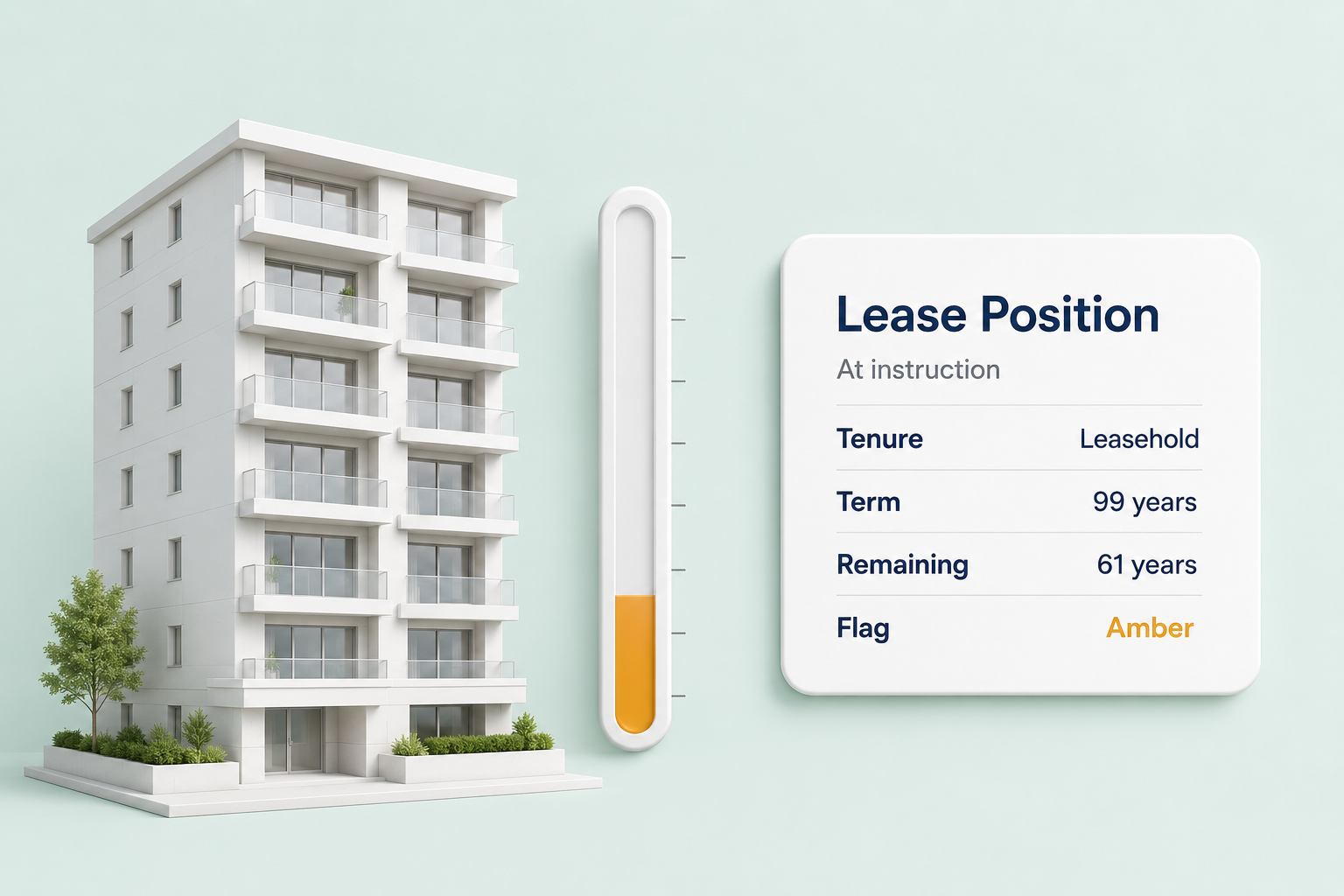
Pulling lease records alongside tenure and ownership at instruction changes the shape of the file. You know immediately whether the property is leasehold rather than assuming from the marketing. Where a term is recorded, a short remaining lease becomes a first-week discussion about extension, cost and timing, instead of a problem that lands when a lender's valuer flags it.
The ownership picture matters too. A title held through a company, or a freehold owned by a party connected to the seller, shapes how you approach enquiries. Seeing that early means your first letters ask the right questions.
| Flat (illustrative) | Tenure | Term recorded | Early flag |
|---|---|---|---|
| Flat 1, Oak House | Leasehold | Long | Green |
| Flat 2, Oak House | Leasehold | Short | Amber |
| 5 Oak Terrace | Freehold | Not applicable | Green |
The table is illustrative. The point is that the leasehold position is known before you send the first enquiry, not discovered halfway through.
The lender objection you would rather pre-empt
Short leases and onerous ground rents are among the most common reasons a mortgage offer stalls. When the issue is known at the start, you can set client expectations, cost an extension and plan the timeline around it. Your material information and SRA or CLC duties are easier to meet when the difficult fact was disclosed calmly in week one rather than defended in a hurry in week seven.
A short lease is a manageable conversation on day one and a broken chain on day forty.
Reading the leasehold position early does not shorten the lease. It gives you the time to do something useful about it.
Meet the lease at the front of the file, not the back.
Try the Early leasehold check → · propalt.ai
Lease records, tenure and ownership data are drawn from HM Land Registry, Companies House and the Propalt intelligence layer. Figures shown are illustrative. This article is general information for conveyancing professionals.
Early leasehold check
Returns lease records where held, including the lease date, expiry and term length, alongside tenure and ownership structure, so a short-lease problem is visible at the start of the file rather than after a lender raises it.
🎯 Best used for
Spotting leasehold risk at instruction
🔌 Propalt APIs used
get_leaseholds get_property