The move you missed had its completion date set a fortnight ago
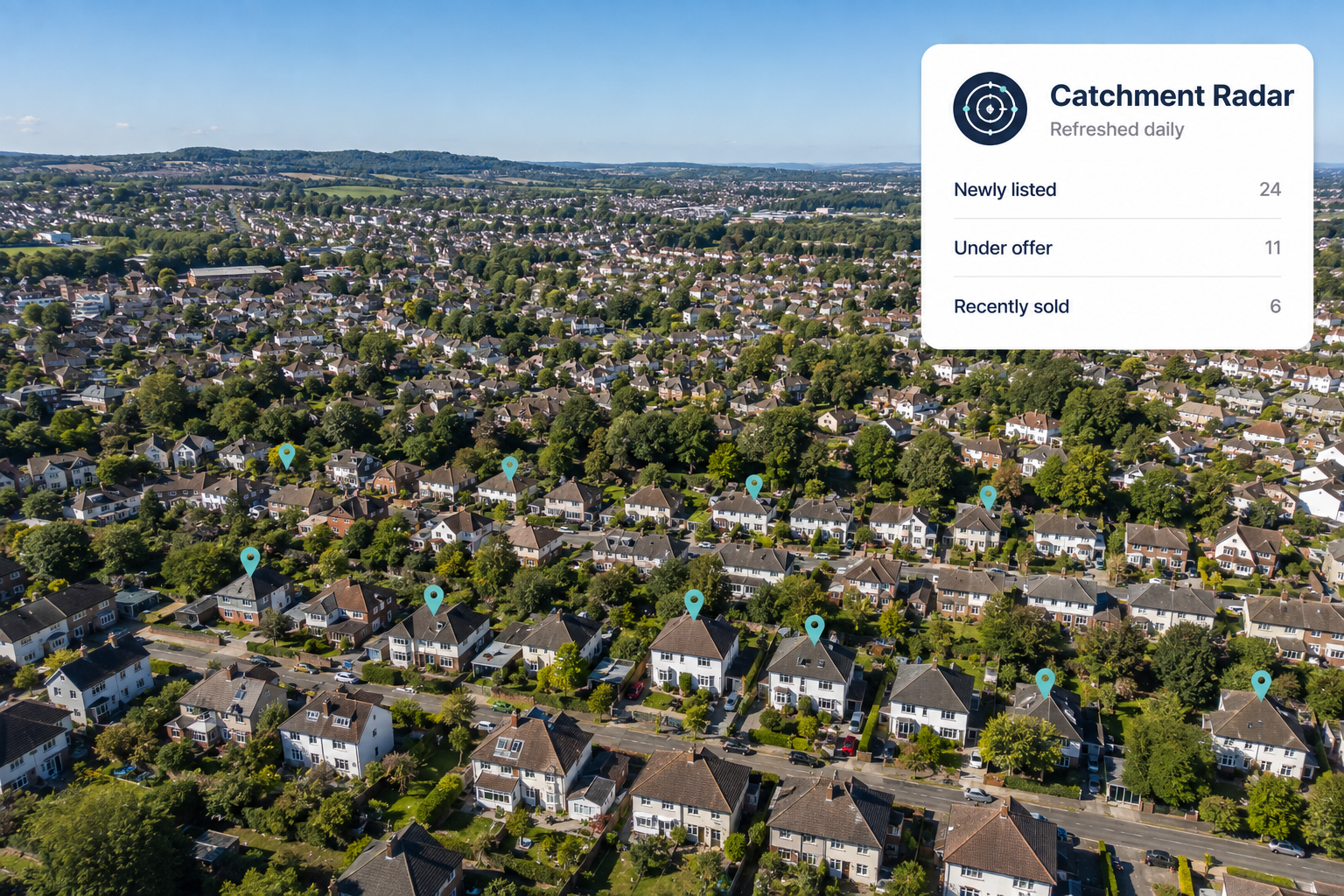
Listings, under-offer and recently-sold status across a catchment, refreshed daily, so the exchange-to-completion window becomes a planning tool.
Propalt Team · For removal companies
Most removal work arrives late. A vendor exchanges, a completion date lands in the diary, and only then do they start ringing round for a van and a crew. By that point you are one of four quotes, competing on price, for a job that was decided weeks ago. The people who win the calm, well-planned moves are the ones who saw the sale coming.
The gap you are working blind through is the sales pipeline itself. A property goes on the market, goes under offer, and completes, and each of those steps happens in your catchment on a schedule you could be reading. The listing tells you a move is possible. The under-offer status tells you a move is likely. The two weeks between exchange and completion is the window your enquiry should land inside, not after.
The pipeline is already visible, if you look at it daily
Fair enough, you cannot see who has booked which remover, and you should not pretend to. This skill works at property and area level only, never at the level of a named person. What it does show is the state of the market on your streets: what is newly listed, what has just moved to under offer, and what has completed in the last few days, refreshed every day rather than checked once a month.
That daily refresh is the point. A weekly portal scroll tells you roughly what is happening. A radar that updates every morning tells you which properties changed status overnight, so a home that went under offer on Tuesday is on your list on Wednesday, while there is still time to reach the household before they have chosen a firm.
| Status (area illustrative) | Count this week | Typical window to completion | Your action |
|---|---|---|---|
| Newly listed | 24 | 8 to 16 weeks | Note for later |
| Under offer | 11 | 4 to 8 weeks | Warm outreach |
| Recently sold | 6 | 0 to 2 weeks | Priority quote |
The figures above are illustrative. What matters is that the ordering comes from real market activity in your outcode, not a rough seasonal guess, so your attention goes to the moves that are closest to happening.
Turn a status change into a timed approach
Knowing a property is under offer is not the same as knowing what to do about it. The value is in the timing. Under-offer volume tells you how much work is coming in the next four to eight weeks, so you can plan crews and vans instead of scrambling. Recently sold volume tells you which streets have live completions right now, so your marketing spend and your call time land where the moves actually are.
Read alongside the monthly market picture, the daily pipeline stops being a snapshot and becomes a rhythm. You learn that a particular estate turns over faster in spring, that a certain price band clears quicker, and that your quiet fortnight last month was visible in the listings three weeks earlier. That is planning, not guessing.
The move you win is the one you saw coming, not the one that rang you last.
Nobody is handing you the household's phone number, and that is right. What you get is a clear, daily view of where the moves are in your catchment, early enough to do something useful with it.
Watch the pipeline, not the phone.
Try the Catchment completion radar → · propalt.ai
Property listing, under-offer, sold-status and market data is drawn from the Propalt intelligence layer. No personal data is used; all work is at property and area level. Figures shown are illustrative. This article is general information for removal company professionals.
Catchment completion radar
Shows what is listed, under offer and recently sold across your catchment, refreshed daily, so the exchange-to-completion window becomes a planning tool rather than a surprise.
🎯 Best used for
Timing outreach to live moves in your area
🔌 Propalt APIs used
search_properties get_property_history get_monthly_market