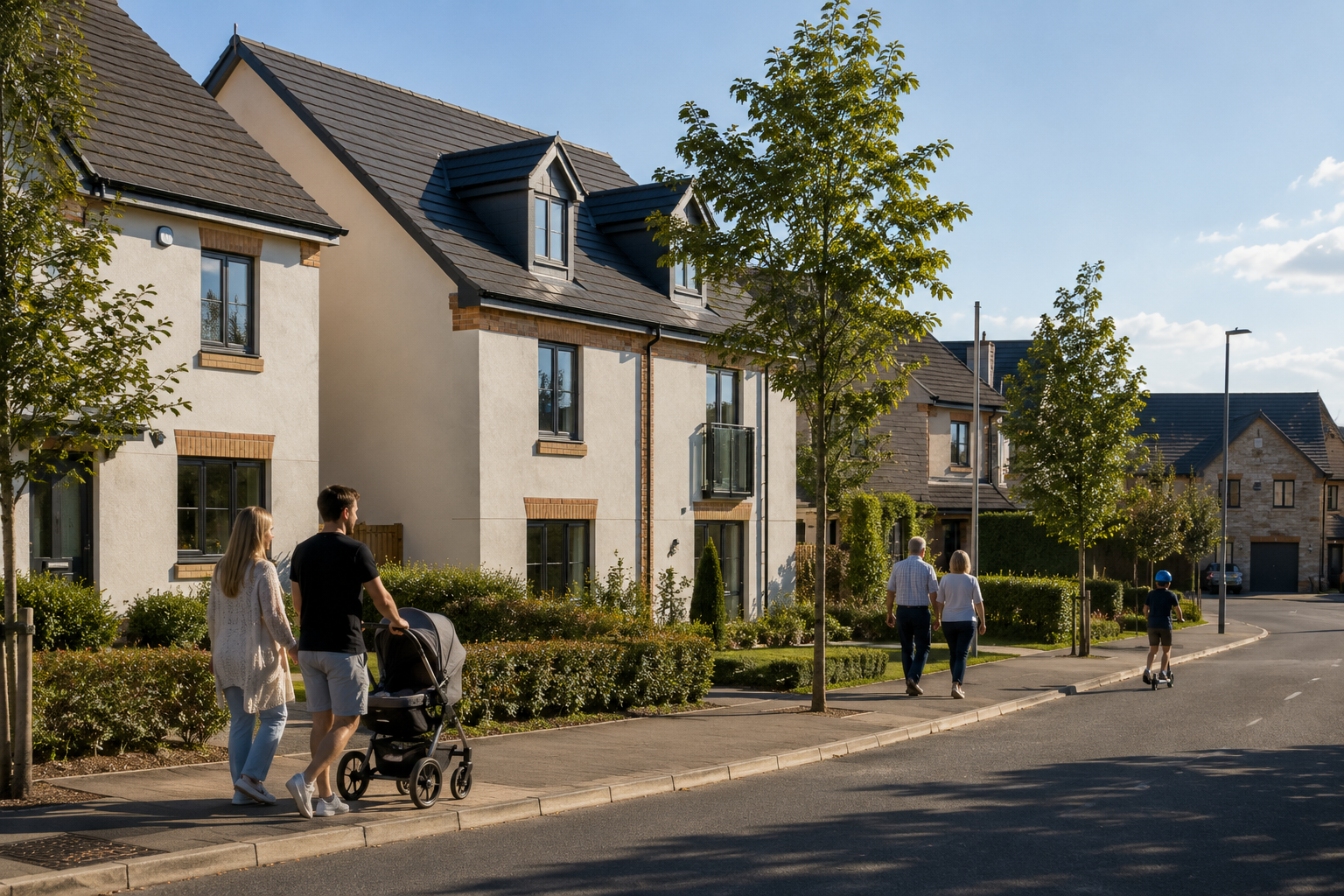
The mix that sold in one town can sit unsold in the next
Demographics, household composition, income and school proximity for the area, read before the unit mix is fixed.
Propalt Team · For property developers
The unit mix is a bet on who wants to live there. Get it right and the scheme sells through as it completes. Get it wrong and you are holding two-bed flats in an area of growing families, or family houses in a market that wants smaller, cheaper stock. The expensive habit is to copy the mix that sold well on the last scheme, in a different town, for a different set of buyers, and assume it will repeat here.
It sometimes does. But the buyers who will actually purchase your units live in the area now, and what they want is knowable before you fix the drawings. Demographics, household composition, local income and the proximity of schools describe the demand you are building into, and they describe it specifically for this site rather than for the last one.
Four signals that describe your actual buyer
Each signal narrows the mix in a different way. Demographics and household composition tell you whether the area skews towards young households, families or downsizers, which points directly at bedroom counts. Local income tells you what those households can realistically borrow and spend, which sets the price points the mix has to hit. And school proximity tells you whether family units in particular have a natural pull, because catchment often decides where families buy.
| Signal (illustrative) | What it points to |
|---|---|
| Demographics | Age and life stage of local buyers |
| Household composition | Family size and bedroom demand |
| Local income | Achievable price points |
| School proximity | Pull for family units |
The table above is illustrative. The mix comes from reading these together, not from any one in isolation. High incomes near good schools point one way; a younger, lower-income profile with limited family housing points another. The data does not draw the scheme for you, but it tells you which bets are supported and which are hope.
Build for the demand that is there
The honest caveat is that demographics describe today, and a scheme completes in a few years, so a mix should leave some room for where an area is heading, not only where it sits now. But building for demand that is actually present, and adjusting at the margins for direction, is a far safer footing than importing a mix wholesale from a scheme that worked somewhere else entirely.
This also feeds the parts of the appraisal that follow. A mix matched to local income sets realistic price points, which in turn supports a defensible GDV, and a mix that fits household composition tends to move faster, which eases the finance you carry. Any affordable requirement under Section 106 lands more cleanly when the market units are already aimed at real local demand. The demand check is where a deliverable mix begins.
The mix that sold out in one town can sit on the books in the next. Build for the buyers who are actually here.
That is the case for testing demand before the mix is fixed. The cost of the check is an afternoon; the cost of the wrong mix is the whole scheme's absorption.
Decide the mix on local data, not on last year's scheme.
Try the Unit mix demand check → · propalt.ai
Demographic, income and school data is drawn from the Propalt intelligence layer. Figures shown are illustrative. This article is general information for property development professionals.
Unit mix demand check
Reads demographics, household composition, income and school proximity for an area, so the unit mix is decided on local demand rather than on a scheme that worked elsewhere.
🎯 Best used for
Setting the unit mix from local demand
🔌 Propalt APIs used
get_demographics get_income get_nearby_schools