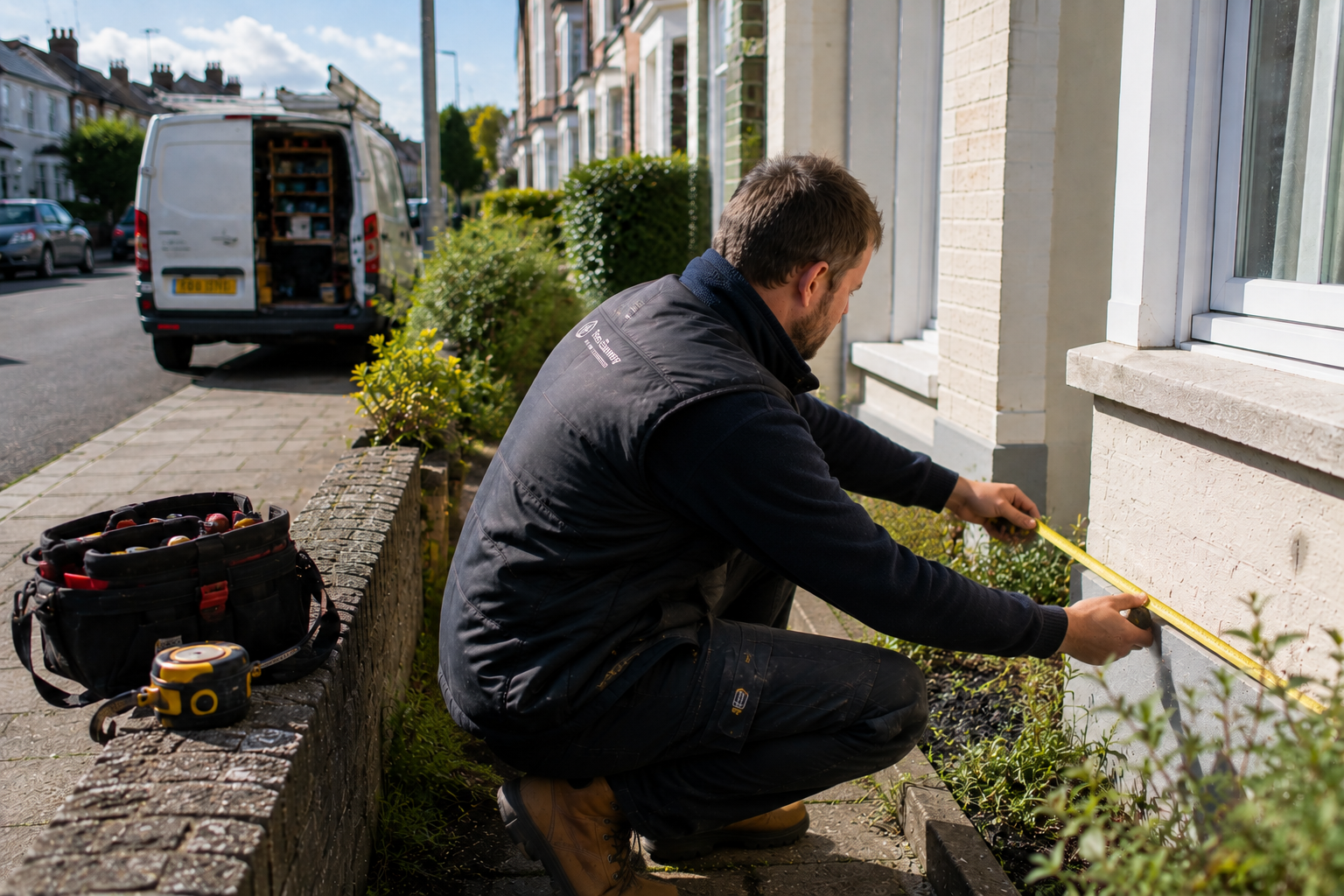
The survey slot you wasted was bookable to a property that qualified
Wall and roof construction, insulation, glazing and heating system read for an address before the appointment is confirmed.
Propalt Team · For home improvement and retrofit installers
A surveyor sitting in a van outside a solid-wall Victorian terrace, quoting for cavity wall insulation that will never fit, is the most expensive way to learn what the building is made of. The visit is booked, the fuel is spent, the slot is gone, and the answer was on the EPC register the whole time.
Booking a survey is not the problem. Booking it blind is. The lead came in, the address looked fine, and nobody checked the wall type, the roof, the glazing or the heating fuel before the diary filled up. The van goes out, the product does not go in, and the next genuine lead waits another week.
The fabric decides the appointment
Every survey slot has a cost, whether the product fits or not. So the question that belongs before the diary is a fabric question, not a location one. Wall construction tells you whether cavity or solid-wall insulation is even on the table. Roof type and loft depth tell you whether loft insulation is worth a visit. Glazing tells you whether the windows are already done. Heating fuel and system type tell you whether a heat pump or a boiler upgrade is the honest conversation.
Read those four things for the address first, and the appointment stops being a guess. A property with uninsulated cavity walls, single glazing and an old gas boiler is a full survey worth booking. A property already at a high EPC band with everything done is a slot you keep free.
| Address (illustrative) | Wall type | Loft insulation | Glazing | Heating | Book survey? |
|---|---|---|---|---|---|
| Address A | Cavity, unfilled | 100mm | Single | Old gas boiler | Yes |
| Address B | Solid brick | 270mm | Double | Recent boiler | Review measure |
| Address C | Cavity, filled | 300mm | Double | Heat pump | No |
The table above is illustrative. The point is that the ordering comes from EPC fabric records for the specific property, not a street-level assumption, so the surveyor travels to the addresses where a sale can actually be built.
One check before the diary fills
The screen takes a postcode or a property and returns the fabric picture in one question. Run it on the lead before you confirm, and the diary fills with qualified visits instead of hopeful ones. The surveyor who used to lose a morning to a mismatched terrace now spends it in front of a property the product suits.
A survey booked on fabric data is a survey that turns into an install.
That is the whole point of screening the address first. You are not chasing conversion after the visit. You are protecting the visit before it happens, so every van that leaves the yard is aimed at work that can close.
Screen the fabric, then book the van.
Try the Pre-survey suitability check → · propalt.ai
Fabric, insulation, glazing and heating data is drawn from the EPC register and the Propalt intelligence layer. Results are screening indicators, not eligibility decisions. Figures shown are illustrative. This article is general information for home improvement professionals.
Pre-survey suitability check
Reads wall and roof construction, insulation, glazing and heating system for any address before the appointment is confirmed, so surveyors only travel to properties the product can fit.
🎯 Best used for
Screening leads before booking survey visits
🔌 Propalt APIs used
get_epc_fabric_by_postcode get_epc_fabric_by_property_id