The disclosure fields are already sitting in the register
Why the first draft of upfront information should not start from a blank form.
Propalt Team · For conveyancers
Upfront material information has changed what is expected at the front of a transaction. Tenure, key property attributes and the basic facts a buyer needs to make an informed decision are meant to be available early. In practice, gathering them often means emails back and forth with an agent, chasing details that are frequently wrong by the time they arrive, and rekeying the same fields into your own system.
It is fair to say the register does not hold everything the regime asks for. Some fields depend on the seller, and some depend on documents that only the parties hold. But a meaningful share of the property-level information is a matter of public record. Tenure, address detail and energy fabric data can be read directly, which means the first draft of the disclosure can be populated from source rather than started from nothing.
From register sources to a populated draft
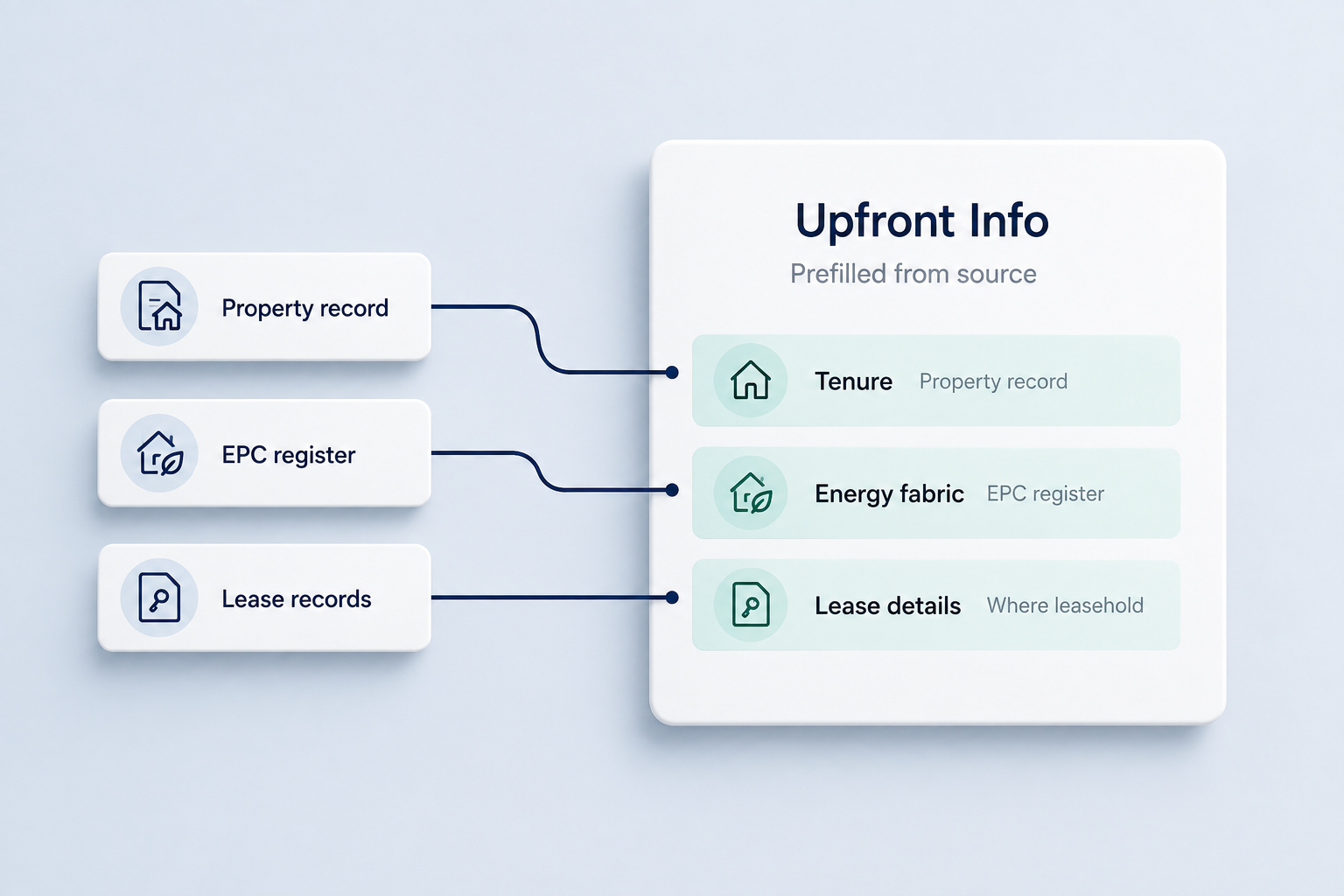
An upfront information prefill reads the property record for tenure and core attributes, adds energy fabric data from the EPC register at postcode level, and pulls lease records where the property is leasehold. Those feed the property-level fields the material information regime expects, so the form arrives partly complete and grounded in a source you can point to, rather than in an agent's recollection.
The benefit is not only speed. Data read from the register is data you can stand behind. When a field is wrong because an agent typed it in a hurry, the error is yours to explain. When it comes from source, the provenance is clear.
| Field (illustrative) | Source | Prefilled |
|---|---|---|
| Tenure | Property record | Yes |
| Energy fabric | EPC register | Yes |
| Lease details | Lease records | Where leasehold |
| Seller-specific facts | Seller | To be confirmed |
The table is illustrative. The point is that the fields with a public source arrive filled, and the ones that depend on the seller are clearly marked as still to confirm.
The disclosure you can stand behind
Material information duties, and your SRA or CLC obligations behind them, are easier to meet when the underlying facts are traceable. Pre-filling from register sources does not remove your judgement about what to disclose and how, and it does not replace the seller's own answers. What it does is give you a first draft that is faster to produce and easier to defend, so the effort goes into the parts that genuinely need it.
The disclosure you drafted from the register is the disclosure you can source when asked.
Prefill does not complete the file. It removes the rekeying and the chasing, and leaves you with the judgement.
Start the disclosure from source, not from a blank form.
Try the Upfront information prefill → · propalt.ai
Property, energy fabric and lease data are drawn from HM Land Registry, the EPC register and the Propalt intelligence layer. Figures shown are illustrative. This article is general information for conveyancing professionals.
Upfront information prefill
Reads tenure, core attributes, energy fabric and lease records from register sources to pre-fill the property-level fields the material information regime expects, rather than chasing the agent.
🎯 Best used for
Drafting upfront material information from source
🔌 Propalt APIs used
get_property get_epc_fabric_by_postcode get_leaseholds