The grant application you started was for a property that never qualified
Why fabric and area context are screening inputs, and why the eligibility decision stays with the scheme.
Propalt Team · For home improvement and retrofit installers
Grant-funded work lives or dies on eligibility, and eligibility is decided by the scheme, not by the installer. That is worth saying first, because the temptation is to treat a promising address as a confirmed one. It is not. What data can do is tell you which addresses are worth taking to the scheme's process, and which are almost certainly not, before the paperwork begins.
Scheme criteria change, evidence requirements are strict, and the final determination rests with the administering body and the household's own circumstances. A screener does not replace any of that. It orders your effort, so the applications you start are the ones with a realistic chance of clearing.
Fabric and context as screening inputs
Retrofit funding routes each turn on different things, but they share a starting shape: a property that stands to gain and, for some routes, a household context that fits. The EPC record gives you the fabric side. A low band, poor insulation and an inefficient heating system are the properties these schemes exist to improve. Area-level income and vulnerability context indicates where affordability-linked routes are more likely to apply.
Used carefully, these are screening inputs and nothing more. They point to properties worth a conversation and a proper eligibility check. They do not confirm that any household qualifies, because that depends on evidence the data cannot see: tenure, benefits, referrals and the scheme's own current rules.
| Property (illustrative) | EPC band | Fabric | Area context | Screening flag |
|---|---|---|---|---|
| Property A | F | Uninsulated, old boiler | Lower income area | Worth checking |
| Property B | E | Part-insulated | Mixed area | Review |
| Property C | C | Well insulated | Higher income area | Unlikely fit |
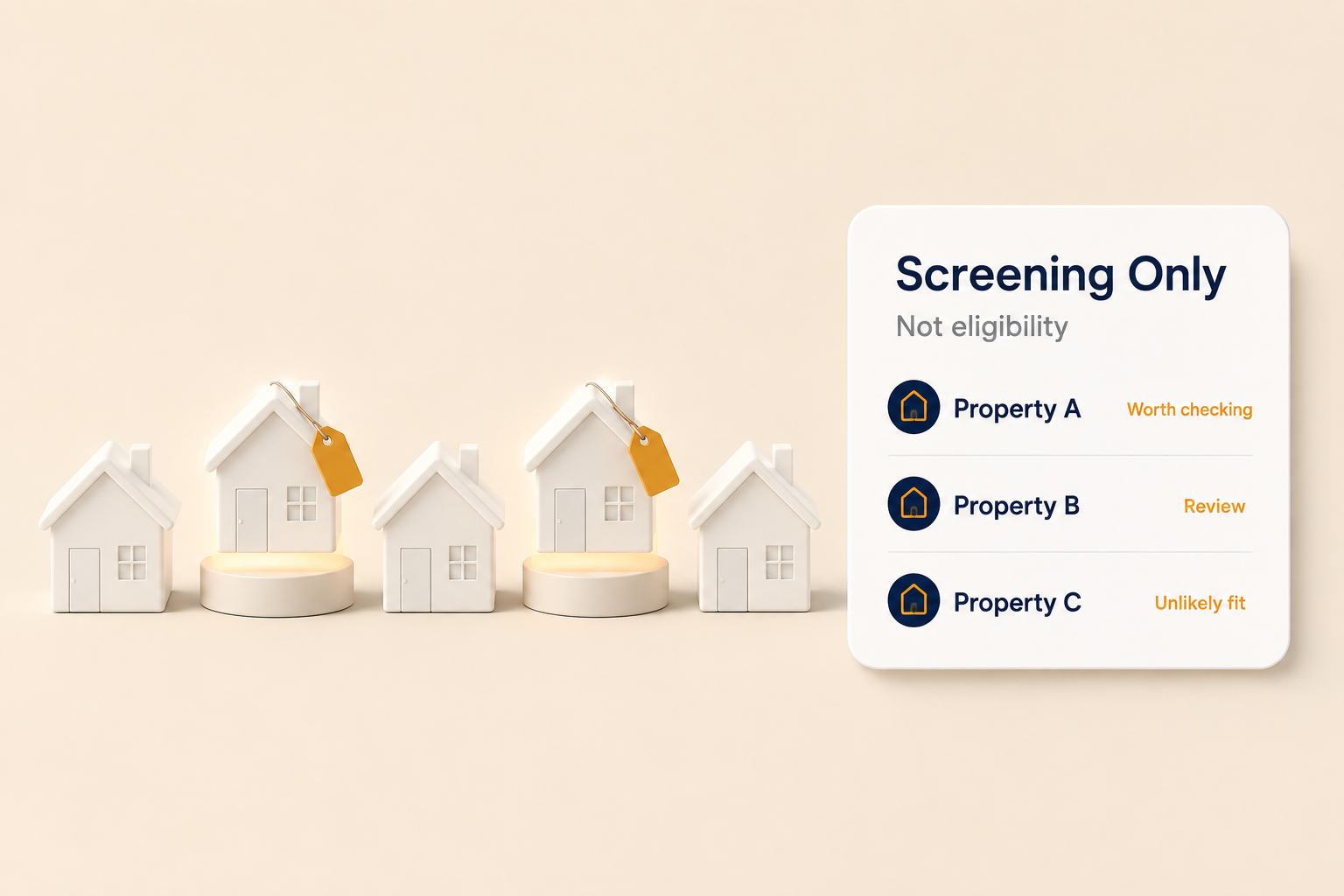
The table above is illustrative. The screening flag is a prompt to run the scheme's own eligibility process, not a substitute for it, and every determination remains with the administering body.
Screening indicators, not eligibility decisions
The screener takes a postcode and returns properties ranked by fabric need alongside area-level income and vulnerability context, framed as indicators. Your team then takes the shortlist through the correct eligibility route, with proper evidence, for whichever scheme is open at the time. The gain is focus: fewer applications started on properties that were never going to clear, more effort on the ones that might.
A screening flag opens a conversation. Only the scheme's own process closes it.
That is the compliance line, and it matters. Presenting a screening indicator as a guarantee of funding is how installers lose trust and households lose time. Used as intended, the screener keeps your pipeline honest and your effort where it counts.
Screen for the shortlist. Let the scheme decide eligibility.
Try the Grant scheme screener → · propalt.ai
Fabric and EPC data is drawn from the EPC register, with area-level income and vulnerability context from the Propalt intelligence layer. Results are screening indicators, not eligibility decisions, and every determination rests with the administering scheme. Retrofit funding schemes open, close and change their criteria; always confirm which schemes are currently available and on what terms before advising a household. Figures shown are illustrative. This article is general information for home improvement professionals.
Grant scheme screener
Combines low-EPC fabric records with area-level income and vulnerability context to flag properties worth taking through a retrofit funding scheme's eligibility process. Screening indicators, not eligibility decisions.
🎯 Best used for
Shortlisting properties before a scheme eligibility check
🔌 Propalt APIs used
get_epc_fabric_by_postcode get_income get_demographics