On 22 June 2026, the government published the Home Buying and Selling Reform Roadmap. It confirmed that material information belongs at the front of the transaction, not deep inside the conveyancing stage where it currently ambushes deals. There is a clear reason for that. On the government's own figures, around one in three sales in England falls through before completion, costing the economy up to £1.5bn a year. The government points to critical information surfacing too late as an important and fixable cause: title documents, planning permissions and building control certificates frequently emerge weeks or months into the process, after buyers have already spent money on surveys and legal work. Scotland, where upfront information through the Home Report and earlier binding contracts are already standard, has a markedly lower fall-through rate than England. The government expects that bringing this information forward through sales packs could halve the number of sales that fall through and cut buying times by around four weeks.
For agents, the duty is already live: the consumer protection provisions of the Digital Markets, Competition and Consumers Act 2024 require material information to be present and clear in listings. The hard part is not the rule. It is sourcing the data behind it, property by property, without slowing your listing process to a crawl.
That is the gap Propalt AI is built to close. This article sets out what the rules require, why the data is the real bottleneck, and how a UK property data API turns compliance from a manual chore into an automated step.
What does material information now require?
National Trading Standards splits material information into three parts. Part A must sit on the first page of every listing. Parts B and C must be prominent and accessible, and gathered before a buyer's solicitor goes looking.
| Part | What it covers |
| Part A | Council tax band or rate, price or rent, and tenure. Required for every listing. |
| Part B | Property type, construction materials, number and type of rooms, utilities and parking. Applies to all properties. |
| Part C | Flood risk, restrictive covenants, planning history and other issues that affect only some properties. |
The roadmap goes further over time: non-statutory guidance and a Code of Practice for property agents arrive later in 2026, and primary legislation requiring sales packs and binding contracts is planned by the end of this Parliament in 2029. The direction never reverses. More information, earlier, for every listing.
Why sourcing material information is the real bottleneck
Knowing what to disclose is easy. Assembling it is not. Tenure and lease terms sit with the Land Registry. Planning history sits with the local authority. Construction and energy detail sit in the EPC record. Council tax, comparables and market context sit somewhere else again. For a busy agency taking on multiple instructions a week, that is hours of manual lookup per listing, spread across a dozen websites, and every gap is a compliance risk and a potential late fall-through.
This is why reform is a data problem before it is a compliance problem. The agencies that will list faster and lose fewer deals are the ones that can pull verified property data on demand, at the point of instruction, and drop it straight into their workflow.
How Propalt AI supplies the material information data
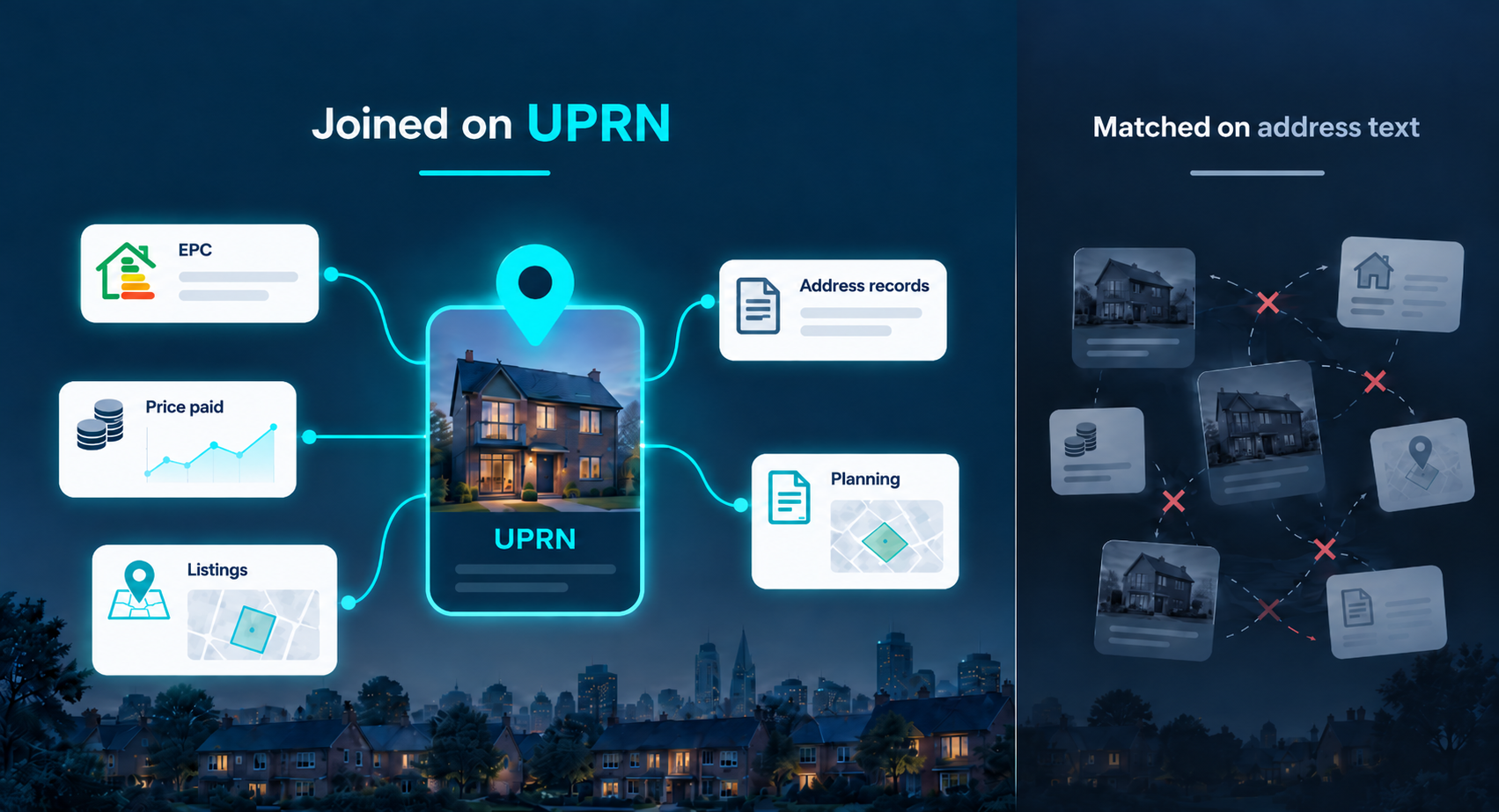
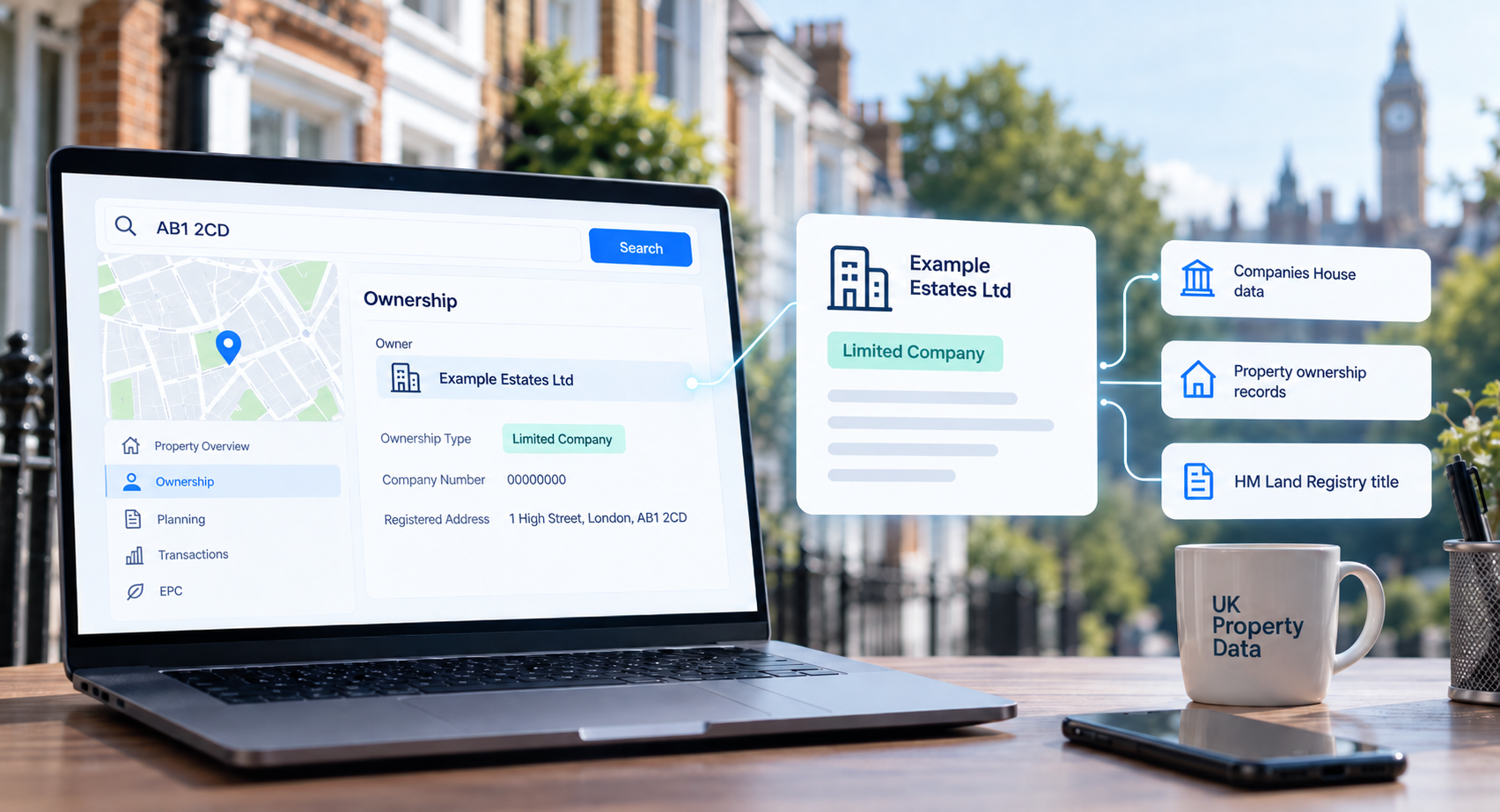
Propalt AI is a property data layer delivered through a UK property data API. Instead of an agent trawling multiple public sources per listing, a single address lookup returns the underlying data that material information depends on. It maps directly onto the Trading Standards structure:
| Material information | What Propalt AI supplies |
| Part A: tenure, council tax, pricing | Tenure, comparable and Land Registry sold prices and an automated valuation (AVM) to support price and rent, plus the council tax band field where available. |
| Part B: property type, construction, energy | Property attributes (type, bedrooms and rooms, floor area, age band) and EPC fabric data covering wall, roof and window construction and running costs. |
| Part C: planning, site risk | Planning application history, plus coal and mining area risk screening. |
Because it is an API, the data does not just sit on a screen. Developers and proptech teams can build it directly into a listing form, a portal upload, or a custom compliance check. Agents get the data pre-filled. Conveyancers and mortgage providers get the same records at source, earlier in the chain.
An open data layer, not another locked-in CRM
Most agency software holds your data inside its own walls. The intelligence it generates is the vendor's to keep, and moving it out is slow by design. Propalt AI takes the opposite position. It is not a CRM and it does not try to replace yours. It is an open intelligence layer that works alongside whatever CRM you already run.
The practical difference matters most exactly when reform raises the stakes. The property data behind a compliant listing should be yours to pull, reuse and move, not trapped in a platform you would lose if you switched suppliers. Your CRM's AI is locked inside their walls. Propalt AI is not.
What this means for agents, conveyancers and proptech builders
The same data layer answers a different need for each audience the reform touches:
- Estate and letting agents. Pull Parts A, B and C data at instruction, list compliant properties faster, and cut the late surprises that break chains. Fewer fall-throughs, less manual lookup, a cleaner audit trail.
- Conveyancers and mortgage providers. Access verified property records at source, earlier in the transaction, to speed due diligence and reduce the back-and-forth that adds weeks to completion.
- Proptech and data teams. Build material information and upfront-data features into your own tools through the API, without stitching together a dozen public sources yourself.
See the property data API and the data behind compliant listings at propalt.ai, and read our earlier piece on data ownership and CRM lock-in.
📌 KEY TAKEAWAY
Material information reform, confirmed in the roadmap published on 22 June 2026, makes upfront property data mandatory rather than optional. The rule is not the hard part. Sourcing the data behind it, property by property, is. Propalt AI closes that gap with a UK property data API that returns the tenure, construction, energy, planning and market records behind Parts A, B and C from a single address lookup, and does it as an open layer that works alongside any CRM rather than locking your data away. Compliance becomes an automated step, and the property data behind your listings stays yours to pull and reuse.
Sources
—GOV.UK (June 2026): Homebuying shake-up to slash delays, cut costs and stop sales falling through —GOV.UK (June 2026): Home Buying and Selling Reform Roadmap —Mortgage Introducer (2026): Why England and Wales need a Scottish-style revolution in homebuying —UK Parliament (22 June 2026): Written statement HLWS134 on the Home Buying and Selling Reform Roadmap —National Trading Standards: Full material information guidance published —Propertymark (June 2026): Home buying and selling roadmap promises support for agents as sector transforms —RICS: Material information, what to know and what happens next —UK Government: Digital Markets, Competition and Consumers Act 2024 —Today's Conveyancer (June 2026): Home buying and selling reform, the detail