Ask any agent why their market feels slow and you'll hear about rates, affordability, buyer confidence. All real. But there's a quieter, more structural reason chains aren't forming — and it sits behind a lot of front doors that never come to market at all.
Too many of the right homes are occupied by the wrong number of people.
Across the country, four, five, and six-bedroom family homes are owned by couples and single owners whose children left a decade or more ago. The house is now too big, too expensive to heat, and too much to maintain — but moving feels like a project, so they stay. Each one is a home a growing family can't buy, a chain that can't start, and a transaction that never happens.
The stall starts at the top of the ladder
A functioning market is a chain of moves. First-time buyers free up rented stock. Second-steppers free up starter homes. Growing families free up second homes. And at the top, downsizers free up the large family homes everyone below is competing for.
When the top of that chain freezes, every link below it tightens. Families can't trade up because the larger homes aren't listed. The homes aren't listed because the owners — comfortable, settled, equity-rich — have no pressing reason to act and no one prompting them to. So the stock that would unlock three or four moves beneath it just sits there.
This isn't a buyer problem you can wait out. It's a supply problem at the top of the ladder — and supply at the top only moves when someone makes the case for moving.
Agents own part of this — and that's good news
Here's the uncomfortable part. The downsizing conversation rarely happens because nobody starts it. The owners aren't searching Rightmove. They're not booking valuations. They're not the people who walk into a branch. They are, almost by definition, invisible to the normal flow of leads — which is exactly why most agents never reach them.
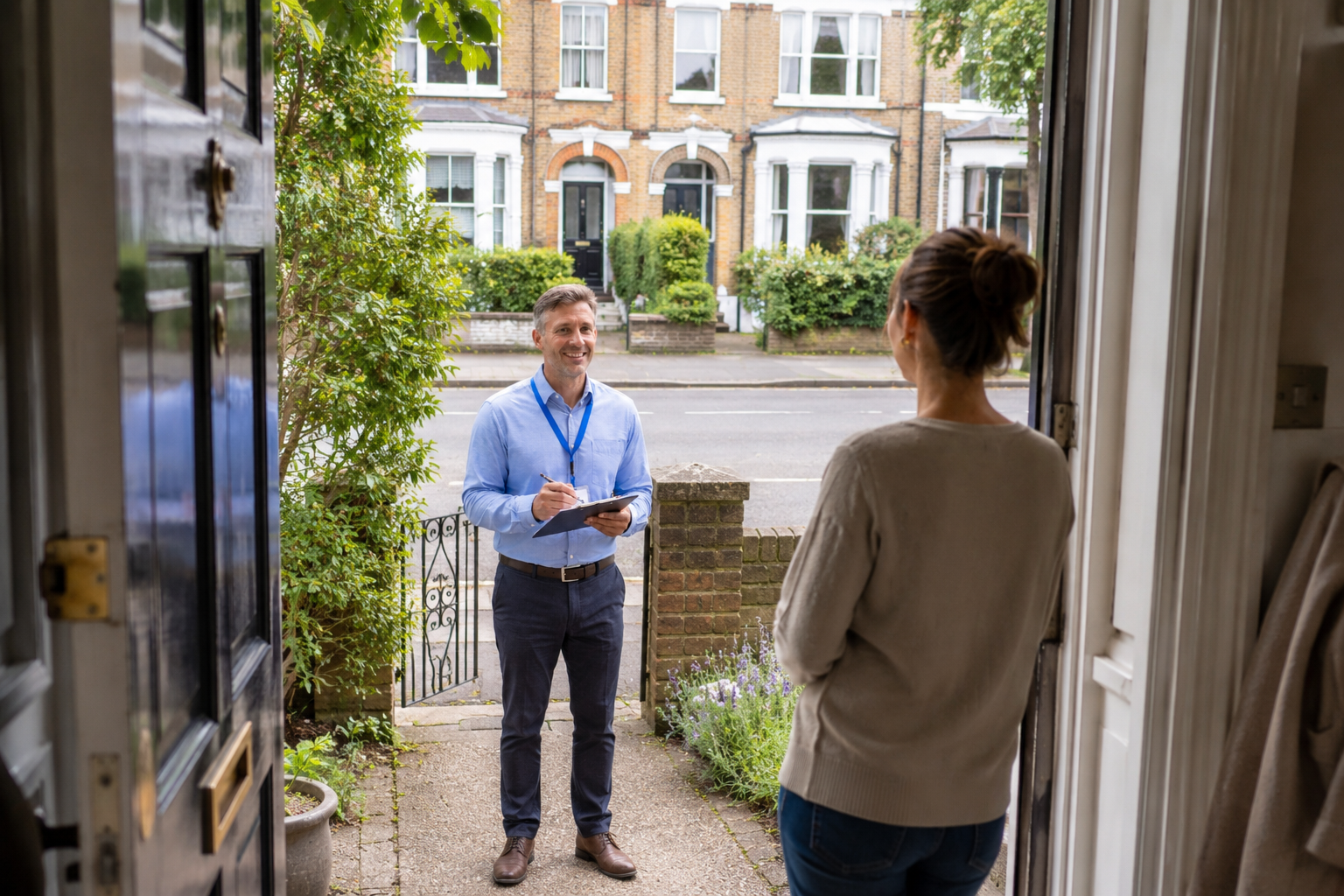
That's the responsibility, and the opportunity. The agent who waits for the downsizer to raise their hand will wait a long time. The agent who proactively, respectfully starts the conversation — “you've been here a while, there are families desperate for a home like yours, here's what it's worth today” — creates the instruction that wasn't going to exist otherwise.
And it's a genuinely good thing to do. Done well, it's not pressure — it's a prompt. Plenty of long-term owners have half-thought about downsizing for years and never had a reason to start. You give them the reason, the figure, and the easy first step. You unlock their equity, you free a family home, and you start a chain. Everyone below you on the ladder benefits — and so does your pipeline.
The hard part isn't the conversation. It's knowing whose door to knock on.
Every agent already knows this works in theory. The reason it doesn't happen in practice is targeting. There are thousands of homes in your patch. Knocking on all of them is a waste of a week. Guessing wastes goodwill on the wrong doors.
A strong downsizer prospect isn't just a big house. It's a specific alignment of signals:
- The home is probably too big now. 4+ bed detached or semi, large floor area — a clear family home.
- They've been there a long time. Sold 15, 20, 25 years ago — long enough that the children have grown and gone, and the equity has built.
- The home is becoming a burden. Older build, lower EPC rating — rising heating and maintenance costs that quietly make a smaller place more appealing.
- The neighbourhood fits. A local profile skewed towards older, owner-occupier, empty-nester households.
No single signal is enough. A big house with new owners isn't a downsizer. A long-term owner in a small flat isn't either. It's the combination that matters — and combining property records, EPC data, transaction history, and census demographics by hand, for a whole postcode district, is not a job anyone finds time for between viewings.
How Propalt builds the cheat sheet for you
This is exactly what Propalt's Downsizer Prospector does — and it does it with one instruction. You give it a postcode district; it does the rest.
Behind the scenes it pulls live property data, EPC fabric records, transaction history, and local demographics through Propalt's intelligence layer, then scores every qualifying home out of 100 across those four signals. It hands you a ranked, RAG-rated list — HOT prospects to call first, WARM ones for the mail round — so you spend your time on the doors most likely to say yes.
Here's a real run for CT6 — Herne Bay. One search returned 33 qualifying prospects; 17 scored HOT.
REPORT — AREA INTELLIGENCE SUMMARY
| 33 Prospects found | 17 Scored HOT (75+) | 23 yrs Top owners' tenure | £821k Top prospect equity* |
- Estimated current value, HPI-adjusted from last sold price. The top prospects are long-term owners sitting on substantial equity — the strongest motivation to make a move worthwhile.
REPORT — SCORED PROSPECT LIST (TOP 8 OF 33)
Sorted by Downsizer Score, highest first. This is the running order for the week.
| # | Address | Type | Beds / Area | Est. Value | Signal |
| 1 | 35 Canterbury Road, CT6 5DQ | Detached | 6 bed / 170sqm | £821k | HOT 95/100 |
| 2 | 7 Eider Close, CT6 5PX | Detached | 6 bed / 171sqm | £662k | HOT 92/100 |
| 3 | 5 Longtail Rise, CT6 5PZ | Detached | 5 bed / 179sqm | £734k | HOT 91/100 |
| 4 | 64 Cavendish Road, CT6 5BB | Semi-det. | 5 bed / 154sqm | £504k | HOT 88/100 |
| 5 | 33 Canterbury Road, CT6 5DQ | Semi-det. | 5 bed / 164sqm | £521k | HOT 88/100 |
| 6 | 3 Longtail Rise, CT6 5PZ | Detached | 5 bed / 175sqm | £572k | HOT 88/100 |
| 7 | 15 Queens Gardens, CT6 5BS | Semi-det. | 5 bed / 136sqm | £560k | HOT 82/100 |
| 8 | 10 Flamingo Drive, CT6 5PY | Detached | 5 bed / 143sqm | £659k | HOT 82/100 |
Note the running order. #1 (35 Canterbury Road, a 6-bed held 21 years) outscores an 8-bed elsewhere in CT6 that's only been owned 10 years — because tenure is the single strongest “ready to move” signal, and the model weights it accordingly. That's the difference between a big house and a likely downsizer.
REPORT — WHY THIS ONE SCORED 95
Every prospect comes with its reasoning, so you know why a door is worth knocking on before you knock:
| Signal | What the data shows | Points |
| Tenure | Owned 21 years — children long gone | 🟢 22/30 |
| Property size | 6-bed detached, 170sqm — well above family need | 🟢 25/25 |
| EPC burden | Older, larger home — high running cost signal | 🟡 18/25 |
| Area demographics | Strong 55+ ownership profile across CT6 | 🟢 18/20 |
| TOTAL — 35 Canterbury Road | 95/100 |
And it shows you where the clusters are
Look at the addresses. Three of the top five sit on Canterbury Road; two more on Longtail Rise; a pair on Queens Gardens. That's not coincidence — it's a street of family homes that were all bought around the same time, by families now at the same life stage. One afternoon walking Canterbury Road, card in hand, puts you in front of several HOT prospects in a single round. The tool doesn't just tell you who to contact — it shows you the most efficient route to do it.
Be the agent who starts the conversation
The slow market won't fix itself, and the downsizers at the top of the chain won't move until someone gives them a reason to. The agent who reaches them first doesn't just win a single instruction — they unlock the family home beneath it, the chain beneath that, and a reputation as the agent who actually makes moves happen in their patch.
Your competitors are waiting for these owners to call. They won't. Get to them first.
Give Propalt's Downsizer Prospector a postcode district and get a scored, RAG-rated prospect list — the under-occupied family homes most likely to move, ranked by who to call first.
Prospect scores and estimated values are data-led indicators generated by Propalt from Land Registry, EPC, and census sources, not guarantees of intent to sell or of property value. Approach all prospecting in line with current data-protection and direct-marketing rules. Example data: CT6 Downsizer Prospects, generated 9 June 2026.